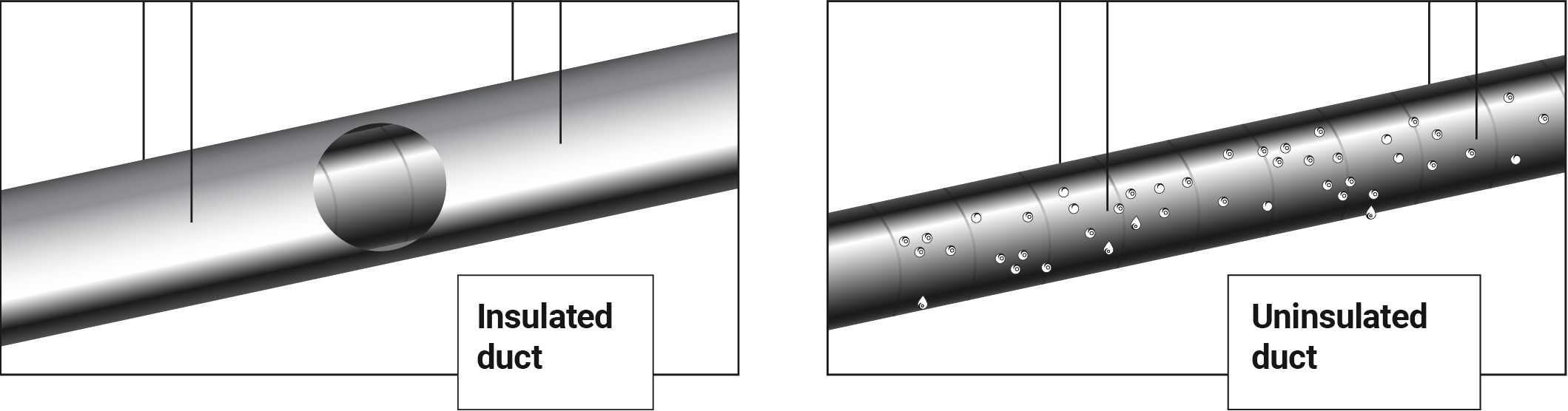




Condensation on ventilation and air conditioning ducts is a common and critical challenge in HVAC design. If it is not properly addressed, condensation can lead to moisture damage, mould growth, corrosion, increased energy losses, and reduced system performance over time.
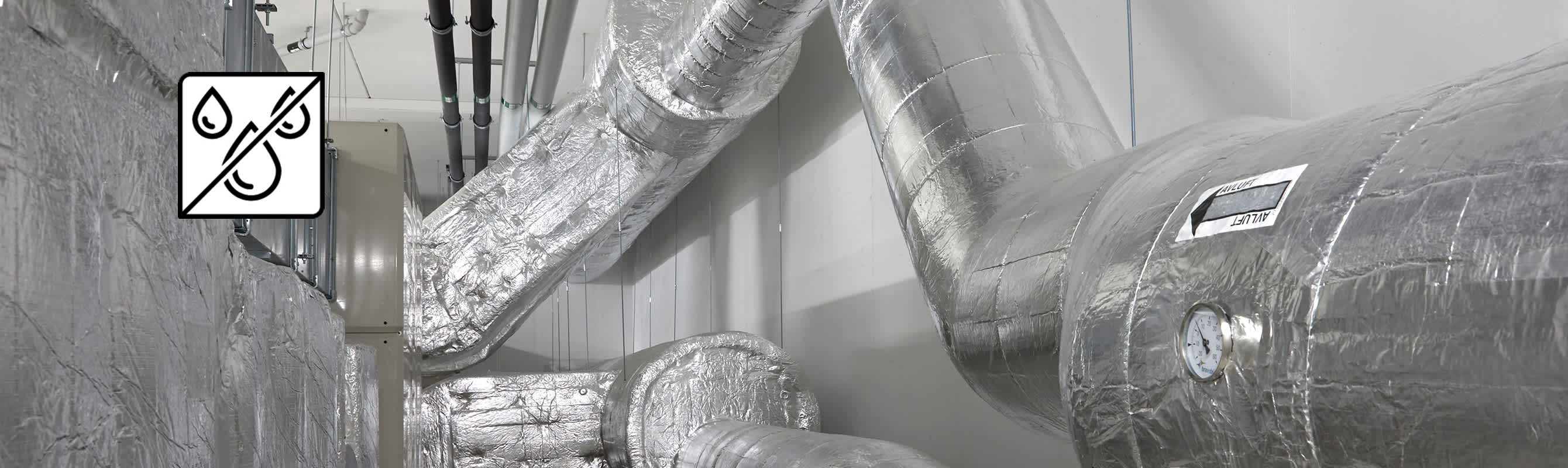
In modern buildings, ventilation ducts are often intentionally left exposed as part of an open-ceiling architectural aesthetic. However, visible ductwork does not eliminate the risk of condensation. On the contrary, exposed ducts are directly affected by room humidity and temperature variations, which increases the importance of correct thermal insulation and a fully sealed water-vapor barrier.
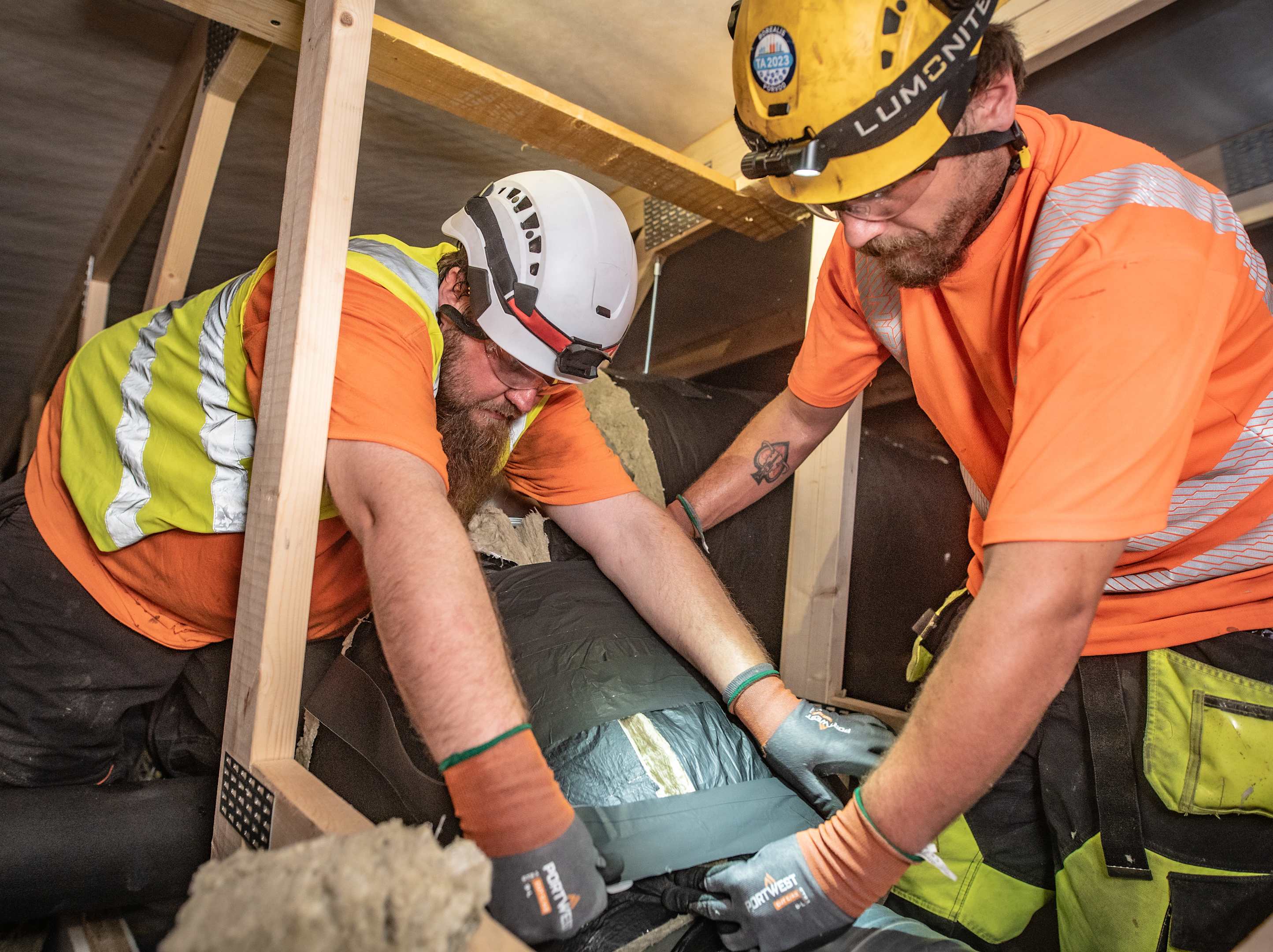
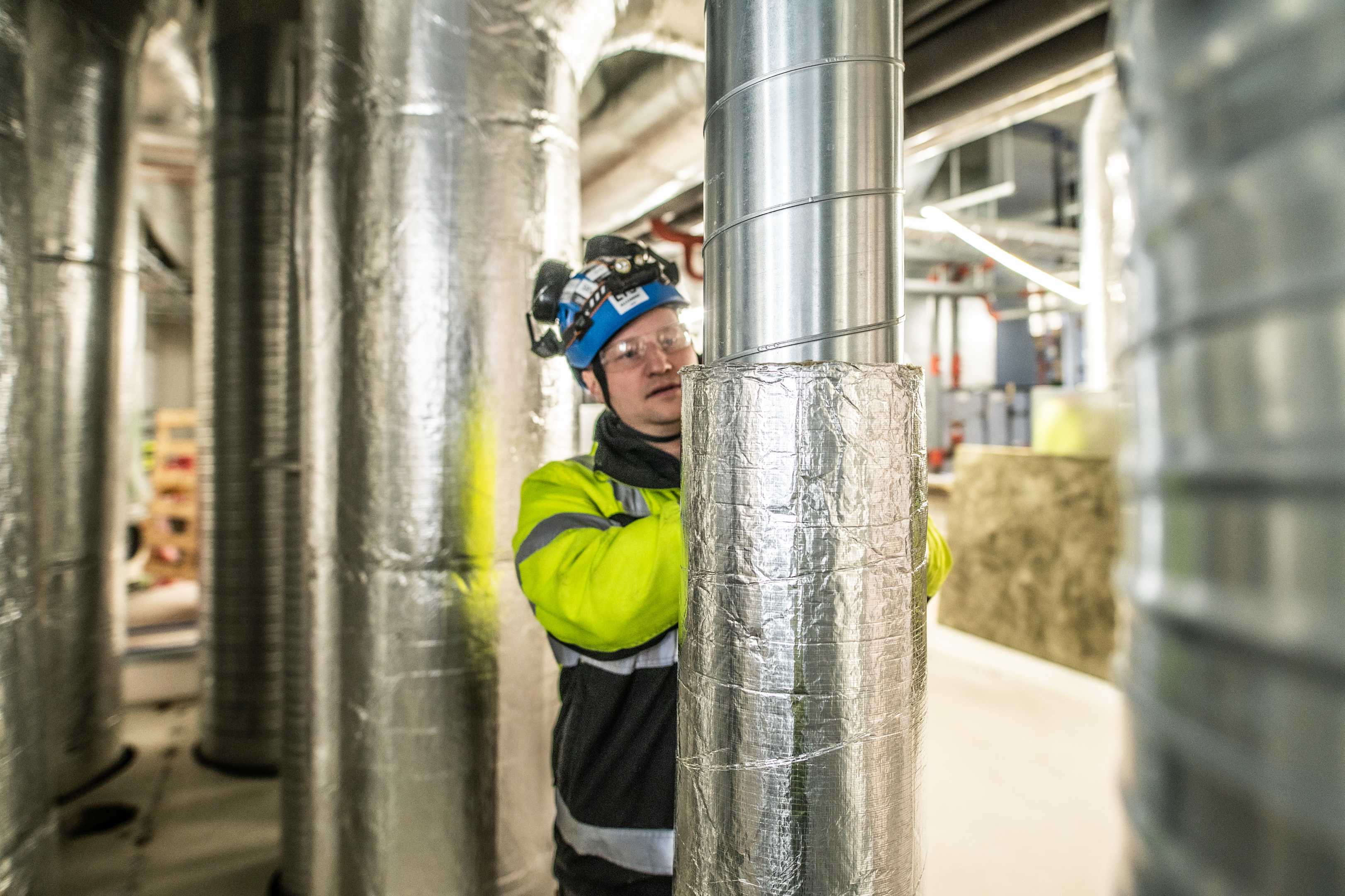
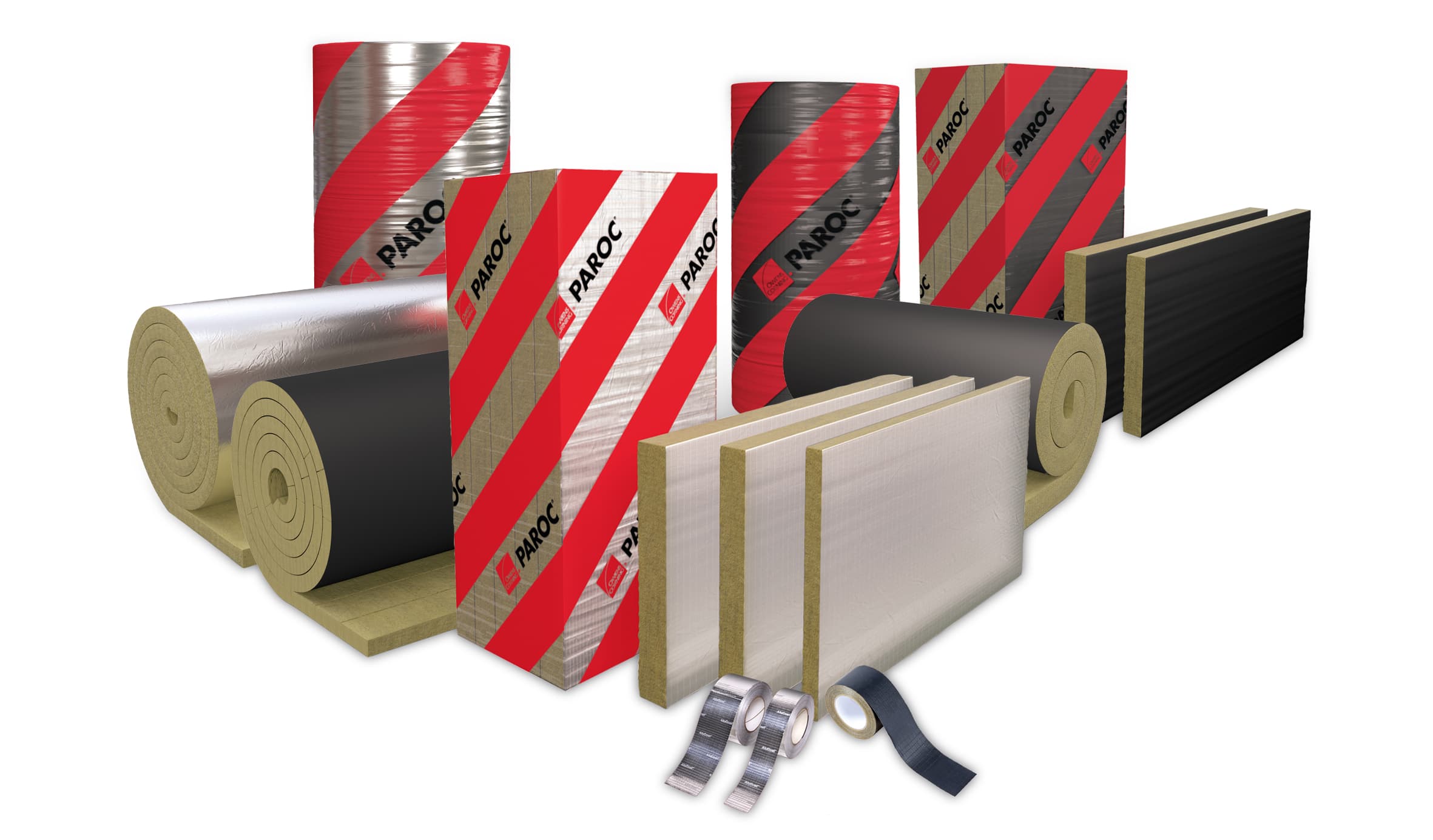
This article explains why condensation occurs, when condensation insulation is required, and how reliable solutions can be designed using PAROC® stonewool insulation systems that combine thermal performance with reinforced vapor-tight facings and compatible sealing tapes, enabling complete barrier continuity across facings, seams, and penetrations.
Why condensation occurs on ventilation ducts
Condensation occurs when water vapor in the air changes into liquid water on a surface that is colder than the surrounding air.
In ventilation systems, this typically happens when:
- Cold air flows inside a duct located in a warmer environment
- The surface temperature of the duct falls below the dew point of the surrounding air
Common everyday examples include dew on grass or condensation on window surfaces. In HVAC systems, the same physical principle applies, but the consequences are more severe due to continuous operation, concealed installations, and long service lives.