


This is a cache of https://www.paroc.com/en/article/what-really-determines-the-performance-of-a-ventilated-facade. It is a snapshot of the page as it appeared on 2026-04-12T00:04:13.910+0000.
| Paroc Article Skip to main content
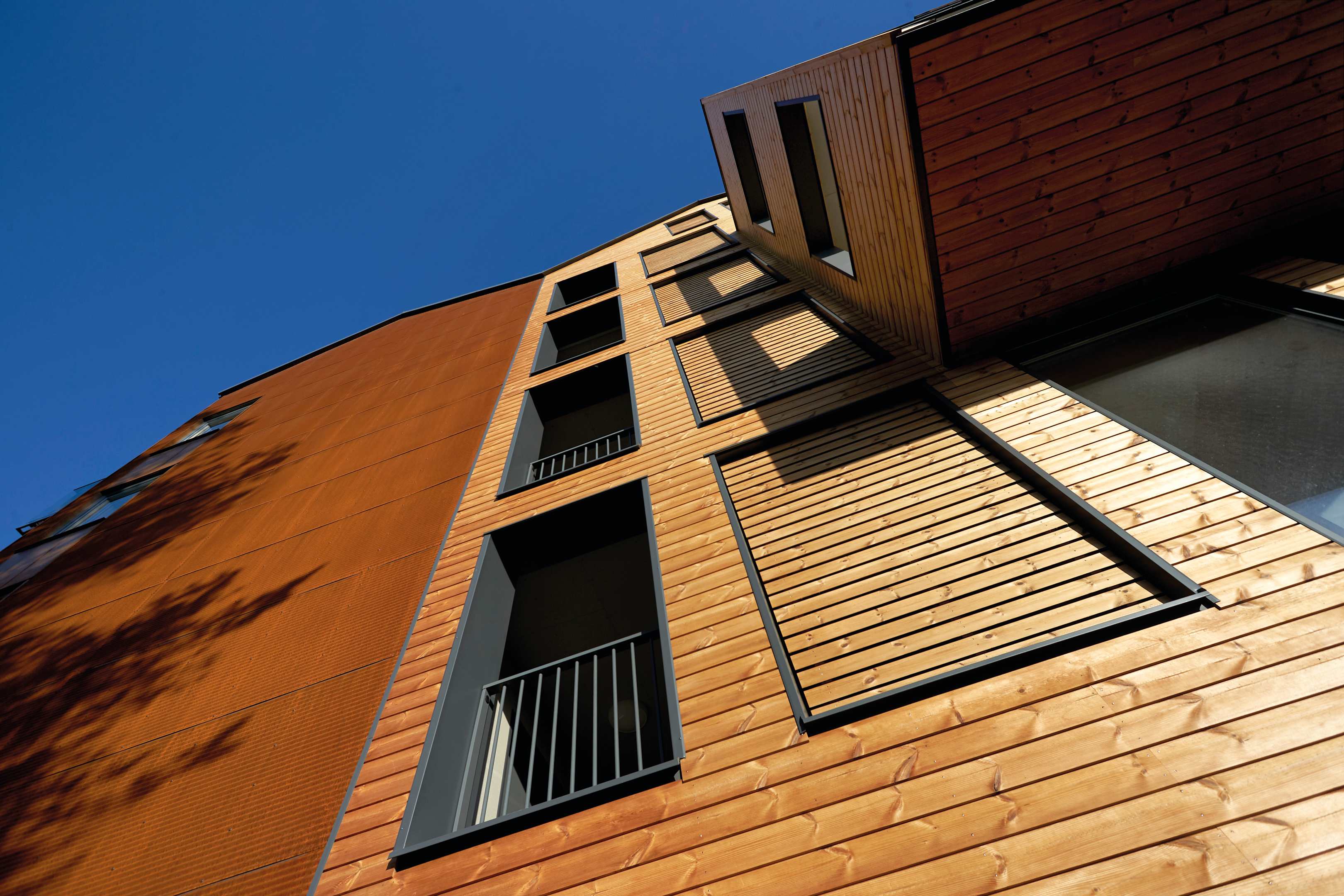
A wooden facade against a blue sky

What really determines the performance of a ventilated facade?

Written By ParocDate Published 2026-04-07

From a moisture management perspective, a ventilated facade is often perceived as a safe and long-lasting solution. However, less attention is paid to a phenomenon that can significantly reduce actual energy efficiency: convection within the insulation layer. This is not a minor detail. Its impact increases with building height, wind conditions, and facade detailing. Selecting the right insulation product is therefore critical in ventilated facade systems.

In the first article in this series, we examined the ventilation gap as the basis for moisture control and durability. The critical question is no longer the size of the gap, but how the entire facade structure performs under wind pressure, temperature differences, and constant air movement. Performance ultimately depends on how airflow, insulation, and thermal bridges interact within an integrated system.

"In ventilated facades, performance is rarely limited by a single parameter. It is the interaction of airflow, insulation, and structural details that ultimately determines the long-term results", says Susanna Tykka-Vedder, OC Paroc Product Leader.
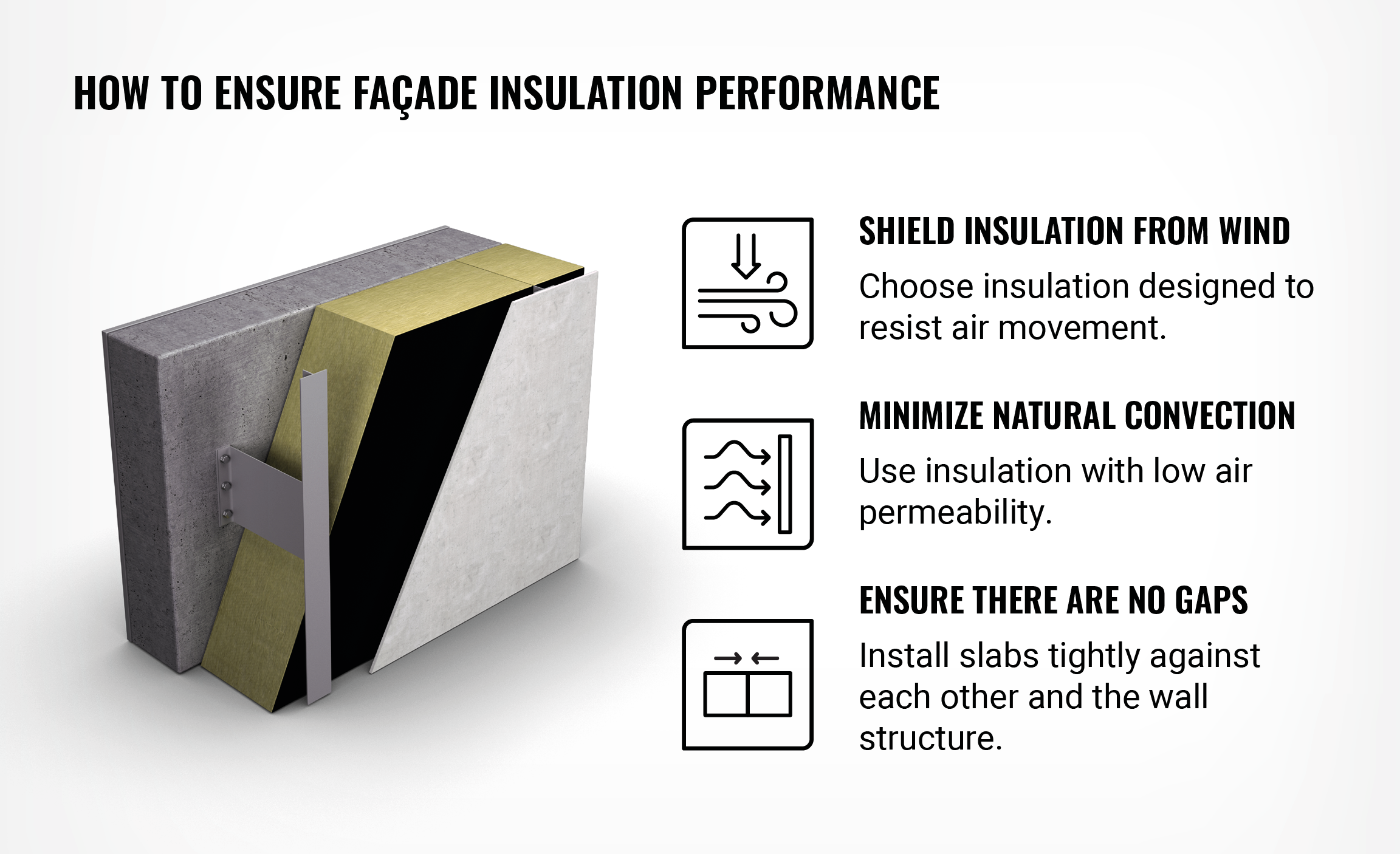
How to ensure facade insulation performance?

How does convection affect ventilated facade performance?

Air movement in a ventilated facade is intentional. The ventilation gap is designed to allow controlled airflow that supports drying of the wall structure. Convection refers to heat transfer by air movement. In a ventilated facade system, air not only moves through the ventilation gap but can also flow into or through the insulation layer due to pressure and temperature differences if the air permeability of the insulation is too high or if there are gaps in the insulation layer.

Studies* conducted by VTT for Paroc show that dynamic pressure differences caused by wind can generate forced convection in the porous insulation. This increases heat loss and significantly reduces the actual thermal resistance of the wall structure compared to the calculated U-value. (* VTT-R-01215-20 “Ventilated façade concept for Paroc - Principle design guidelines”) 


What does research say about air permeability limits?

Using numerical simulations, studies analysed the thermal and moisture performance of ventilated facades. The key findings are clear:

  • When airflow in the ventilation gap is free and wind conditions create pressure differences, the air permeability of the insulation must be very low to keep convective heat loss under control.
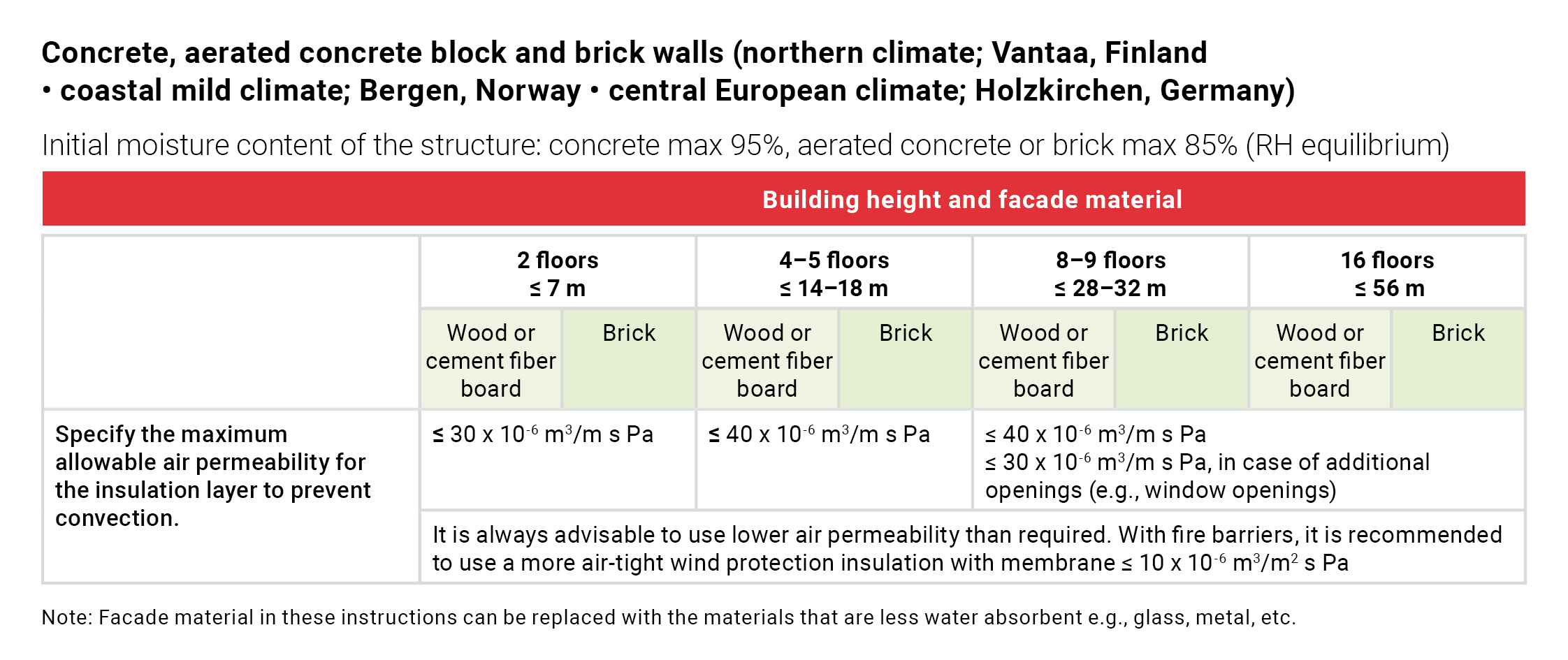
  • VTT defined a guideline value, stating that insulation air permeability should not exceed the level of 50 × 10⁻⁶ m³/m·s·Pa if the insulation is used without separate wind protection.

In addition, the results indicate that high-pressure conditions locally – for example, near ventilation openings and fire barriers – significantly increase the risk of forced convection. In such areas, a separate wind-resistant layer may be required.

When insulation is exposed to pressure or temperature differences, air movement within the insulation layer can increase heat transfer. This phenomenon, whether natural or forced convection, may reduce the effective thermal resistance of the wall under real operating conditions.


Why does convection reduce energy efficiency?

The calculated U-value assumes that heat transfer in the structure occurs mainly through conduction. In a real ventilated facade, this assumption does not always hold true. When air is allowed to circulate within insulation that is too porous,

  • heat transfer through the structure increases,
  • the effective thermal resistance of the insulation decreases,
  • the building's energy consumption rises, even if calculated design values are met on paper.

A study conducted by VTT emphasizes that the effects of convection are not short-term but influence the building's energy balance on an annual basis, particularly in cold and windy climates.

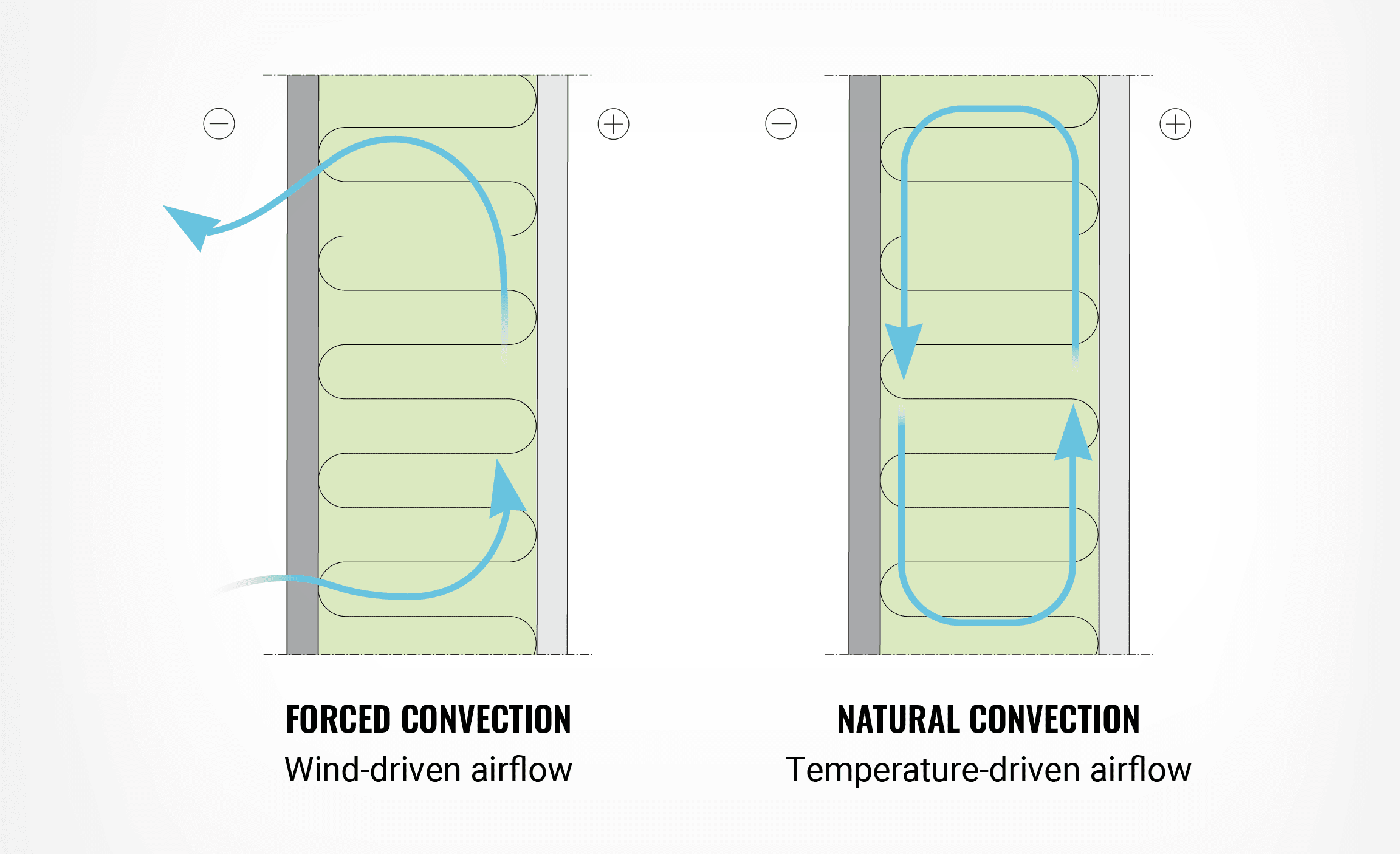
Natural convection occurs when significant temperature differences between indoor and outdoor air cause air movement within the insulation layer. This airflow in highly porous insulation can increase heat transfer and reduce the effective thermal resistance of the wall, especially during cold winter conditions.

Forced convection results from wind-induced pressure differences, particularly near ventilation openings and fire barriers. Local airflow may penetrate insulation layers where air resistance is insufficient. Stable performance requires low air permeability and, where necessary, additional wind protection.

In ventilated facades, the insulation must therefore have a sufficiently low air permeability, to minimise convective heat loss. As building height increases and ventilation demand grows, airflow resistance becomes increasingly important.

When fire barriers or other obstructions are introduced into the ventilation cavity, local pressure differences may intensify, increasing the risk of forced convection within the insulation layer. 

"The air permeability of the insulation is not a secondary characteristic in ventilated facades. It has a direct impact on how the insulation reacts to pressure differences and determines whether the calculated performance is maintained in practice", says Susanna.

image showing what is forced convection and natural convection

Thermal conductivity in a dynamic facade

The thermal conductivity (λ) of the insulation remains a key parameter in facade design. U-values provide a standardized way of evaluating heat transfer through a wall assembly using established calculation methods.

In practice, defining insulation based on λ values alone is not sufficient. Airflow resistance must also be considered as a design criterion. In facade areas exposed to higher dynamic pressure — particularly near ventilation openings — an effective wind-resistant layer may be required to ensure predictable long-term performance. The wind-resistant layer must limit air movement while remaining permeable to water vapor.

In addition to airflow resistance, the impact of penetrations, air gaps, and mechanical fixings such as fasteners and wall brackets must be included in U-value calculations through appropriate correction factors. When these factors are considered together, calculated performance more accurately reflects how the facade behaves in practice.

"When thermal insulation is evaluated not only as a material but also as part of a dynamic facade assembly, design decisions become fundamentally stronger”, says Susanna.

Susanna Tykka-Vedder, OC Paroc Product Leader

Susanna Tykka-Vedder, OC Paroc Product Leader

How to choose the right insulation for ventilated facades

  • Consider building height and wind exposure
  • Check needed air permeability for the insulation from Paroc “Designer guide”
  • Evaluate the need for a wind protection layer near openings
  • Include bracket correction in U-value calculations
  • Use simulation-based design guidance where available.


Paroc solutions for convection control

PAROC ventilated facade solutions have been developed in line with VTT's research findings. The design approach considers not only lambda values but also how the insulation performs as part of a dynamic facade system.

Low air permeability stone wool insulation

PAROC Stonewool insulation provides inherently high airflow resistance, limiting air movement within the insulation layer and reducing convective heat transfer.

PAROC Cortex and PAROC tento wind-resistant insulation

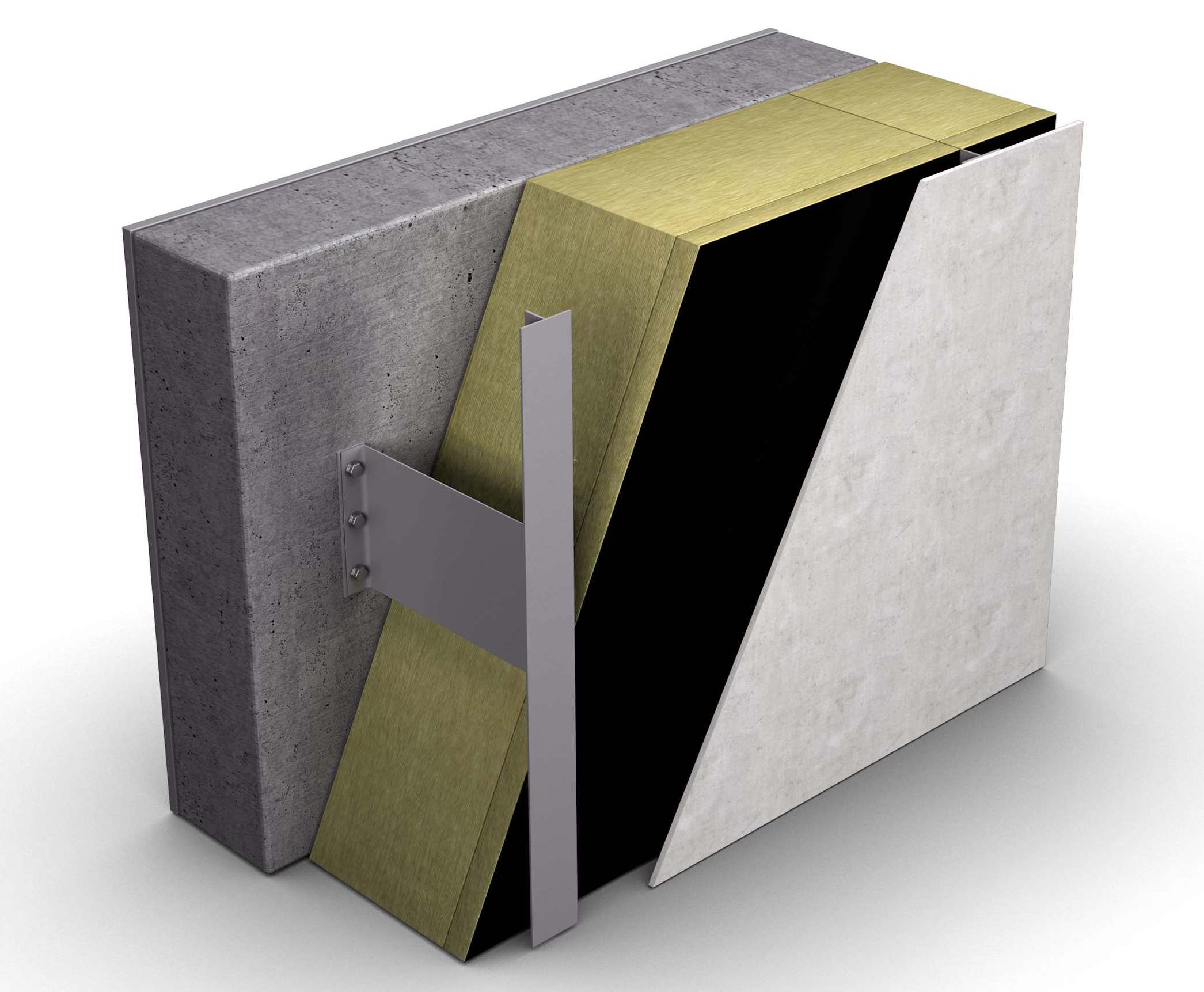
PAROC Cortex wind-resistant insulation slabs form an effective and continuous airtight layer on the outer surface of the insulation. The surface of the insulation board has a weather-protective wind protection film, which is considerably permeable to water vapor. The wind-resistant layer allows all joints and sheet joints to be taped into one tight layer. The coating of PAROC Cortex products has a very low air permeability of ≤10 x 10-6m3/m2·s·Pa.

PAROC tento wind-resistant insulation boards offer consistently low air permeability throughout the product structure, making them suitable for various building types. Their air permeability is only ≤30 x 10-6m3/m ·s·Pa.

Paroc’s design guide for ventilated facades is based on extensive numerical studies by VTT that examine convection under real operating conditions — not only under idealized calculation conditions.

Paroc's design guide provides dimensioning tables and guidelines based on VTT's simulations for different building heights and climate zones. This supports designers in developing solutions where moisture safety and energy efficiency reinforce each other.

VTT’s research and Paroc’s solutions show that thermal performance in ventilated facades results from the combined effect of airflow, insulation air permeability, wind resistance, and structural detailing.

When thermal insulation is assessed as part of a dynamic system – not merely as a material – facades can be designed to perform predictably, maintain energy efficiency throughout their life cycle, and withstand changing climatic conditions. This is where the real performance of a ventilated facade is defined.

FAQ: Ventilated facade insulation and convection


Does convection really affect the U-value?

Yes. If insulation air permeability is too high, real-life heat loss may exceed calculated values.

Is the lambda value enough when selecting insulation?

No. Airflow resistance, as well as possible air gaps and thermal bridges must be considered alongside the λ-value.

When is a wind resistant layer required?

Wind resistant layer in ventilated wall structures is required where the insulation is exposed to air movement.

In the next article, we will examine how bracket design influences ventilated facade systems, affects insulation thickness, and ultimately determines overall thermal performance and long-term energy efficiency.

To explore the role and key requirements of the ventilation cavity in ventilated facades, read the previous article here.

Design guide


Take a closer look on the Ventilated Facades Design Guide.

Explore our ventilated facades solutions

We offer ventilated facade solutions for new buildings as well as renovations. There are solutions for wooden or metal frame buildings, masonry, or concrete walls, with one or two layers of insulation for various facade facings.

Share this page on:

Related Articles

A white building with ventilated facade is seen from beneath with a light blue sky in the background.

Small Gap, Big Impact: Rethinking Ventilated Façades for Tomorrow’s Climate

It is the insulation solution – and how it performs within the façade system – that still largely determines the thermal, acoustic, fire, and moisture behavior of the external wall. Ventilated façades meet all these requirements.
Read more