

This is a cache of https://www.paroc.com/en-gb/article/pipe-insulation-thermal-conductivity. It is a snapshot of the page as it appeared on 2026-02-22T04:05:47.441+0000.
The Ultimate Guide to Pipe Insulation: More Than Just Thermal Conductivity | <strong>paroc</strong> Article
Skip to main content
Hvac thermal Pipe insulation

The Ultimate Guide to Pipe Insulation: More Than Just Thermal Conductivity

Written By parocDate Published 2026-01-05

Everyone recognises HVAC pipe insulation – but why can two products made from the same material, with identical diameter and thickness, deliver such different results? The answer lies in their internal structure. In this article, we’ll explore what makes paroc stonewool pipe insulation so effective and why the difference go beyond just heat loss.


Why Technical Insulation Matters

Insulation for HVAC systems isn’t just about appearance. Its primary role is to reduce energy loss – a requirement under UK Building Regulations and industry standards. For heating, cooling, ventilation, and domestic hot water systems, insulation must meet minimum performance criteria to comply with Part L of the Building Regulations (Conservation of Fuel and Power). These regulations aim to improve energy efficiency and reduce carbon emissions in buildings.

Technical specifications for insulation thickness are provided in BS 5422:2023, the UK standard for thermal insulation of pipework and equipment. It sets out minimum insulation thickness based on pipe diameter, operating temperature, and the thermal conductivity (λ-value) of the insulation material. Compliance with BS 5422 ensures systems operate efficiently and meet legal requirements.


Stone Wool Pipe Sections – A Proven Solution

High-quality pipe insulation is not only a compliance requirement but also an opportunity to create energy-efficient, safe, and comfortable buildings – whether new or refurbished. Choosing the right insulation can exceed standard requirements, leading to lower heating and cooling costs and improved system reliability.

Among the available solutions, stone wool pipe sections stand out. They are widely used for insulating a variety of HVAC applications:

  • Heating pipes
  • Chilled water systems
  • Domestic hot and cold water pipework
  • Circular ducts in ventilation and air conditioning systems

Benefits of paroc Stonewool Pipe Insulation

  • Complies with UK standards including BS 5422 and BS EN ISO 12241 for thermal performance.
  • Reaction to fire classification under EN 13501 as Euroclass A1 or A2-s1,d0. See our Declaration of Performance documents.
  • Excellent thermal insulation, reducing heat loss and improving energy efficiency.
  • Supports sustainability goals and contributes to BREEAM and LEED certification. Environmental Product Declarations (EPDs) available.
  • Long-term performance – thermal conductivity remains stable over time thanks to the fibre structure and air-filled porosity.
  • Easy installation with integrated self-adhesive overlap; available in larger diameters for flexibility.


Choosing the Right Material Is Only the Beginning

While stone wool is a proven material, not all products deliver the same performance. The method for measuring thermal performance under real-life conditions is defined by BS EN ISO 8497, which simulates actual operating conditions on insulated pipes. This approach considers real heat losses during use – not just the material’s intrinsic λ-value.

Why does this matter? Internal structure differences significantly affect performance, even though standards don’t classify them. When selecting insulation, consider not only compliance but also how the product is engineered for optimal thermal resistance.

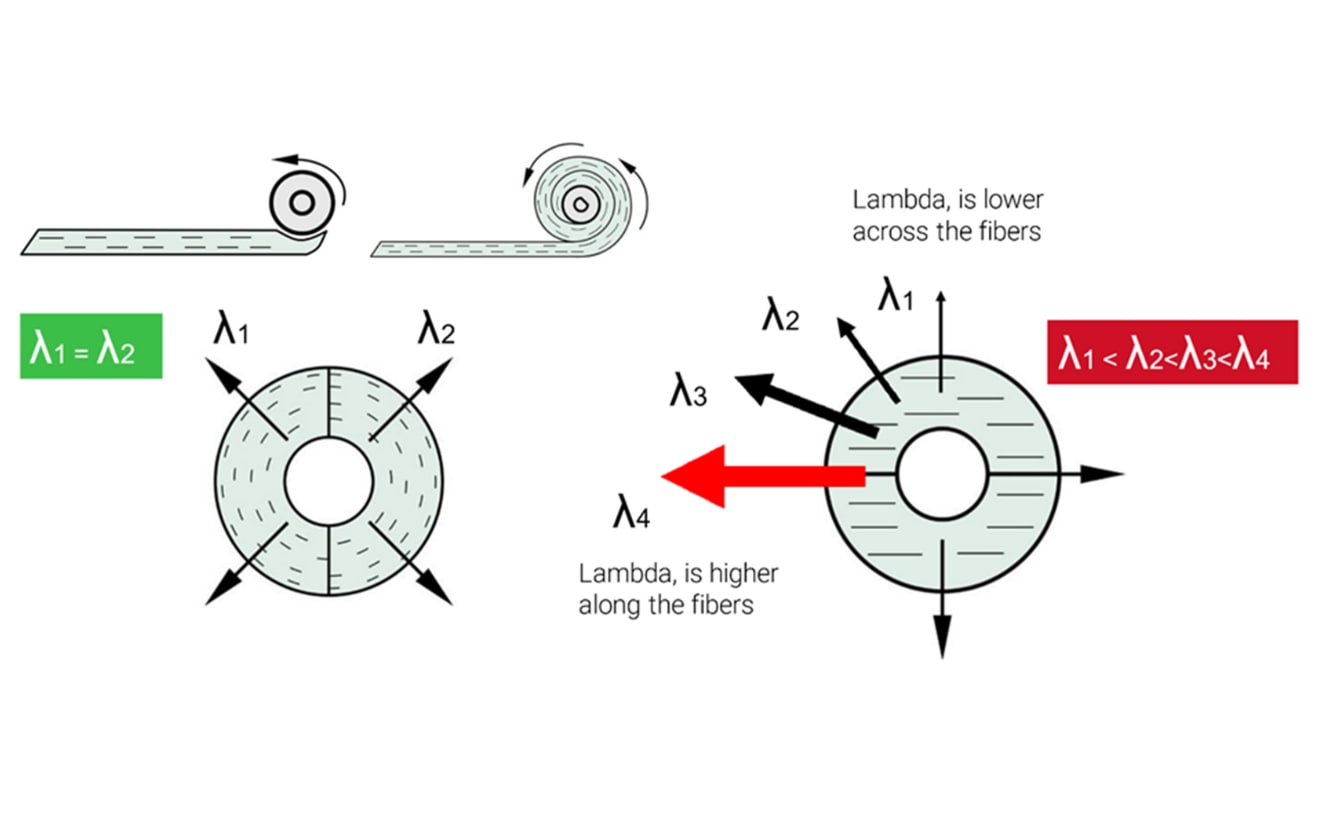
Fibre orientation pipe insulation

Why paroc Pipe Insulation Performs

paroc stonewool pipe sections achieve effective performance through optimal fibre orientation. Heat flows outward from the pipe toward the environment and fibres aligned perpendicular to the surface conduct heat more easily, allowing energy to escape. The manufacturing process mechanically winds fibres concentrically around the pipe, forcing heat to pass through multiple layers rather than along fibres. As a result, this creates greater thermal resistance and ensures consistent temperature retention.


Beyond Heat Loss – Acoustic Comfort

paroc stonewool also offers excellent acoustic properties. Its uniform fibrous structure absorbs noise from mechanical and building systems, making it ideal for environments where comfort matters – such as hospitals, offices, cinemas, and theatres.

For UK projects, compliance with Part L, BS 5422, and BS EN standards is essential. paroc stone wool pipe insulation not only meets these requirements but exceeds them, delivering energy efficiency, fire safety, and acoustic comfort for modern buildings.

Contact our UK&IE team for more information.

Share this page on: