

This is a cache of https://www.paroc.com/en-gb/article/pipe-insulation-compliant-with-uk-regulations. It is a snapshot of the page as it appeared on 2026-02-22T03:20:10.698+0000.
Pipe insulation compliant with uk regulations | <strong>paroc</strong> Article
Skip to main content
stone wool pipe insulation

Is Your Pipe Insulation Compliant with UK Building Regulations?

Date Published 2025-07-01

There is a lot to think about when it comes to Building Regulations. Using pipe insulation to limit energy loss is a legal requirement, but it is also about creating an efficient, safe and comfortable building. There is more at stake than your reputation if you fail to meet the standards.

But do you know what to look out for? How do you choose the best pipe insulation for your project while meeting the legal standards?

Throw in BREEAM, LEED, WELL and others and things get confusing. But there is good news. Stone wool pipe insulation can help with them all. Stone wool is reliable, fire-safe and high-performing. Qualities other materials struggle to match.

Here is our guide to the relevant rules and how to choose the best HVAC pipe insulation for your project.


Understanding the Latest Regulations

Part L: Energy Efficiency Requirements

Buildings must meet energy performance standards as part of the UK's net zero by 2050 target. Part L of the UK Building Regulations sets the standards for energy efficiency and thermal performance in buildings.


Part L requirements for HVAC systems and pipe work include:

  • Minimum thermal performance for heating and cooling systems.
  • Maximum heat loss rates allowed for different pipe sizes and operating temperatures.
  • Energy efficiency targets for overall building performance.
  • Service requirements for fire safety and thermal performance.

Uninsulated or poorly insulated pipework adds to total building energy loss, affecting Part L compliance. So, adequate pipe insulation is essential for meeting these targets.


BS 5422:2023: The Technical Standard

BS 5422:2023 provides comprehensive guidance for HVAC applications with operating temperatures from -40°C to +700°C. Minimum insulation thickness increases with pipe diameter and operating temperature. While surface emissivity significantly affects requirements.

Check the thickness you need using our handy HVAC pipe insulation thickness guide.
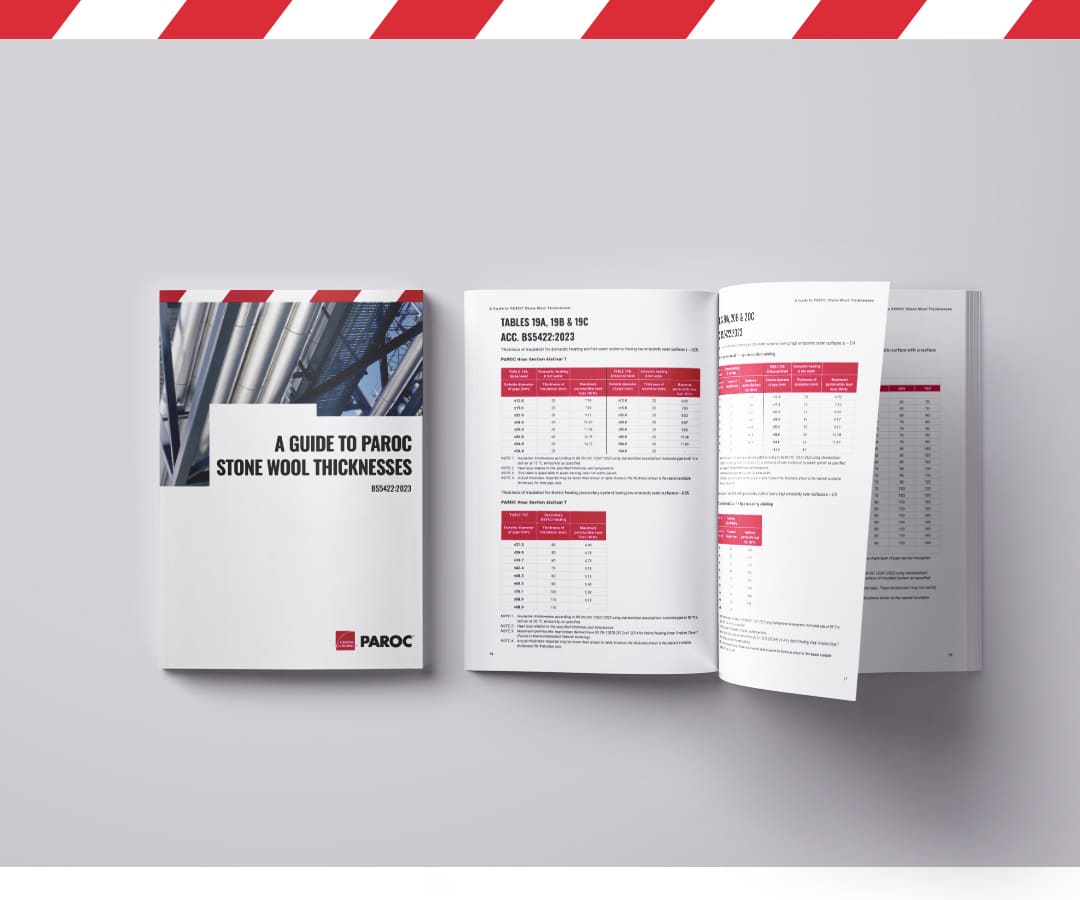
HVAC pipe insulation thickness guide, image

Fire Safety

Part B of UK Building Regulations covers fire safety in the UK Building Regulations. All pipe insulation materials should meet BS EN 13501-1 ‘Fire classification of construction products and building elements’. paroc® pipe insulation exceeds this. paroc® stonewool insulation products are non-combustible. When tested to EN 13501-1, paroc® products offer the highest fire class, either Euroclass A1 or A2-s1,d0.


Sustainability Standards

Although not part of UK Building Regulations, it is worth noting common sustainable standards. These are popular across new build and refurbishment in commercial projects and residential:

BREEAM standards which assess all stages of the building’s lifecycle and its impact on people and the environment.

LEED standards for healthy, efficient and cost-saving, sustainable ‘green’ buildings.

WELL standards to enhance people’s experiences and wellbeing. Including thermal comfort, material guidance, and air and ventilation quality.

Passivhaus standards.

TM65 calculations for embodied carbon and whole-life performance.

Environmental Product Declarations (EPD) include the whole-life environmental impact of products and materials. Learn what to look for when choosing products with our how to read an EPD article.


Why Compliance Matters

Building Regulations compliance is critical for any construction team’s success. It helps you provide energy-efficient, high-performing and safe buildings for everyone’s benefit. Whether you are specifying for a new build or retrofitting an existing system, understanding the regulatory landscape helps you make informed decisions. Decisions that benefit both your project and your clients.

For HVAC pipe insulation, using a specification and getting things right first time saves you time and money. As well as maintaining your professional reputation.

Poorly insulated pipes can lead to bigger problems:

  • Building control failure, enforcement action and project delays.
  • Costly revisits to make good or potential fines.
  • Poor EPC or failing future inspections as part of the Energy Performance Building Directive (EPBD) for AC systems over 12kW.
  • Fire safety risk from using combustible pipe insulation materials.
  • Poor performance and energy efficiency, leading to potential indemnity claims.


How To Specify Compliant HVAC Pipe Insulation

1. Confirm operating levels

Temperature requirements. Heating, hot water, chilled water or condenser temperatures for supply and returns.

Setting and environmental conditions. Basement or roof, internal or external, high-temperature plant rooms, high moisture applications?

2. Check pipe insulation thickness

BS 5422:2023 provides thickness tables based on pipe diameter, operating temperature and surface emissivity.

Work out what thickness you need using our handy HVAC pipe insulation thickness guide.

3. Address fire safety requirements

For BS5422:2023 you must use materials rated B-s3,d2 or better under BS EN 13501-1. However, for some specific areas you must use non-combustible materials:

  • Ceiling voids and service corridors.
  • Escape routes and protected stairwells.
  • Service penetrations through fire-rated elements.
  • Plant rooms and boiler houses.

Stone wool pipe insulation is non-combustible and achieves the highest Euroclass rating - A1 or A2-s1,d0, unlike other insulation materials.

4. Account for moisture

  • Prevent condensation on outer surfaces for chilled water applications.
  • Plan to maintain thermal performance in high humidity.
  • Limit moisture exposure in basement settings.

Stone wool’s structure repels liquid water and is still breathable. Any moisture from the construction stage can still evaporate.

5. Consider Long-Term Performance

Stone wool does not settle or compress throughout the building's lifecycle. Providing long-term durability and efficiency thanks to a consistent thickness and density.

Regular heating and cooling cycles do not affect stone wool performance either. The structure remains stable across the full BS 5422 temperature range.

Stone wool resists chemical damage from cleaning agents and other typical HVAC system additives.


Comply with UK Building Regulations and Deliver Long-Term Performance with Stone Wool

Technical insulation is more than just wrapping pipes and ducts though. Good quality insulation should be a calculated choice. A choice to save energy, improve performance and meet the latest standards.

We develop paroc® stonewool insulation to do just that. We meet building regulations, as per the legal minimum, for new constructions and renovations. We offer pipe insulation solutions for ventilation and air conditioning systems, heating pipes, chilled water pipes, and hot and cold-water pipework. Plus, drainage and wastewater pipework.

Stone wool pipe insulation benefits:

  • Meets UK Building Regulations BS 5422 for hot and cold pipework.
  • Fire safe and non-combustible for any application (Euroclass A1 or A2-s1,d0 rated as per EN1350 1-1[PA1] ).
  • High thermal properties to reduce heat loss and improve energy efficiency.
  • Helps to meet BREEAM, LEED and WELL standards. Please view EPDs for more information.
  • Naturally resistant to moisture, limiting damp and mould build up.
  • Maintains performance and efficiency for decades.
  • Easy to handle and available in a wide range of formats.


Tools and Resources for Specification Success

HVAC pipe insulation thickness guide

All the data you need to meet UK Building Regulations BS5422:2023 for HVAC pipe insulation. Cross-reference pipe diameter, operating temperature and insulation thickness for each paroc® product.

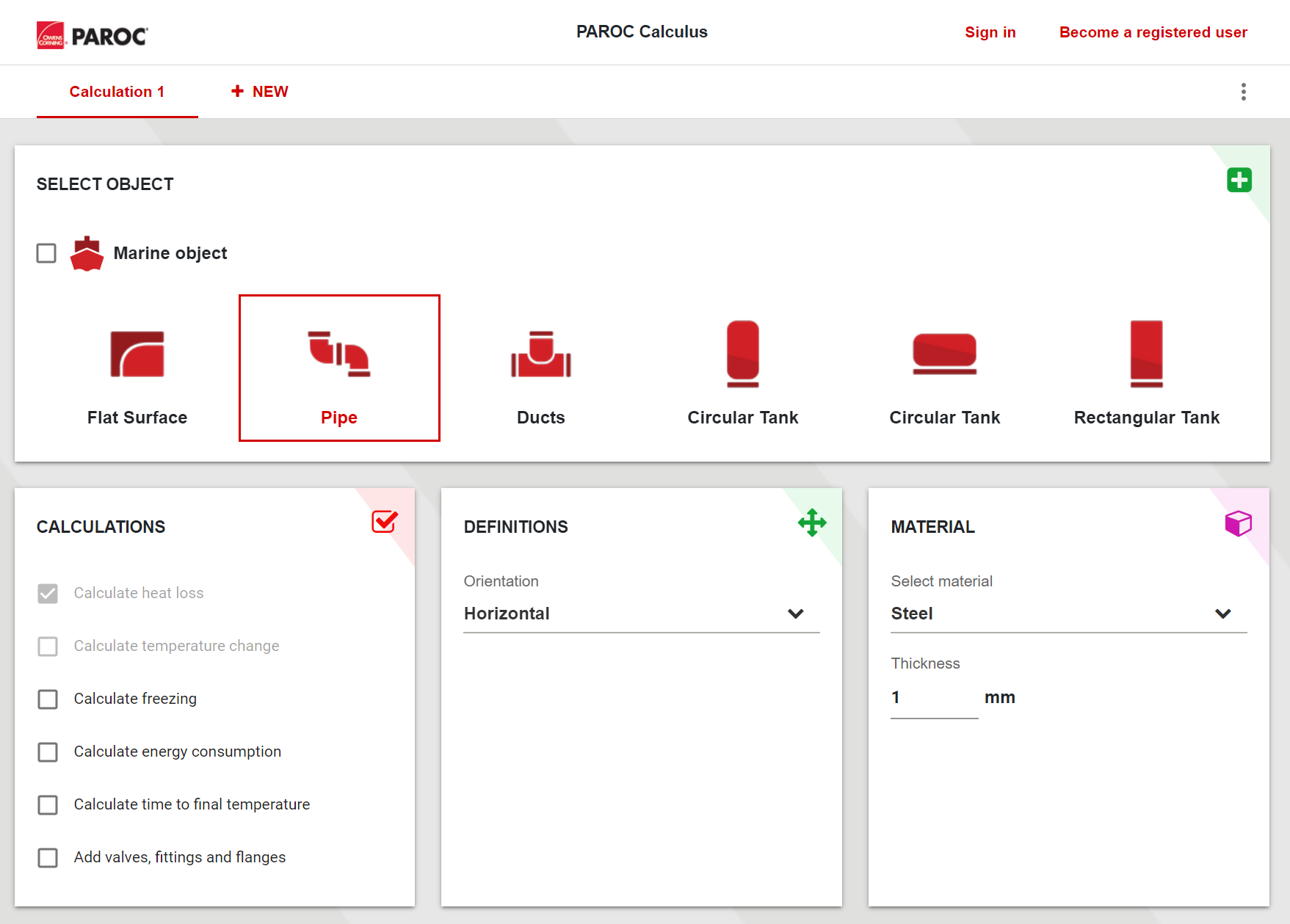
paroc® Calculus

Our online tool to help you work out the best specification for your project. Add your configurations to work out the thermal performance. Then find pipe insulation options to meet regulations and your performance requirements. All calculations meet the ISO 12241:2022 standard.

HVAC insulation installation guides

View step-by-step instructions for all our technical pipe insulation. Includes duct wraps, pipe bends, mats and pipe sections.

Documents to support your compliance

Find our safety data sheets, emission classifications, energy performance data and EPDs.

How to read an EPD

A useful guide to understanding the whole-life environmental impact of products and materials. Learn what to look for when choosing the most enduring sustainable products.

Find a paroc® dealer near you

Speak to your local dealer about your pipe insulation requirements. They can offer valuable advice and help create the ideal specification.

Contact us for specialist advice

Our technical team is available to help. Get advice, specification support and purchasing information.

Find paroc® products on NBS Source or add paroc® products to your projects in NBS Chorus.


Share this page on: