
This is a cache of https://www.paroc.com/en-gb/applications/building-insulation/renovation/external-walls-renovation/ventilated-facade-on-top-of-old-masonry. It is a snapshot of the page as it appeared on 2026-02-19T22:07:42.161+0000.
Ventilated facade on top of old masonry | Paroc Applications
Skip to main content

Ventilated facade on top of old masonry/ concrete blocks facade

Old structure:

  • Old masonry wall or light-weight concrete block wall without insulation in good condition

New external structure:

  • Leveling mortar (if needed) to ensure airtightness of the structure.
  • Metal facade system (e.g. wall brackets + T-profile)
  • Thermal insulation

Single-layer insulation solution:

  • Thick PAROC WAS 35t or PAROC Cortex One wind protection insulation.

Two- or three-layer insulation solution: 

  • PAROC Ultra thermal insulation layer + PAROC Cortex b or PAROC WAS 25(t) wind protection insulation.
  • When using PAROC Cortex b - wind protection slabs, wind protection taping and sealing of seams to surrounding structures is done by using PAROC XST 042 (all seams) and PAROC XST 041 (outer corner sealing) tapes.
  • Ventilation gap according to facade system.
  • Cladding boards or ventilated rendered facade.

Note! Facade renovation must not impair the fire safety or the sound insulation level of the structure.
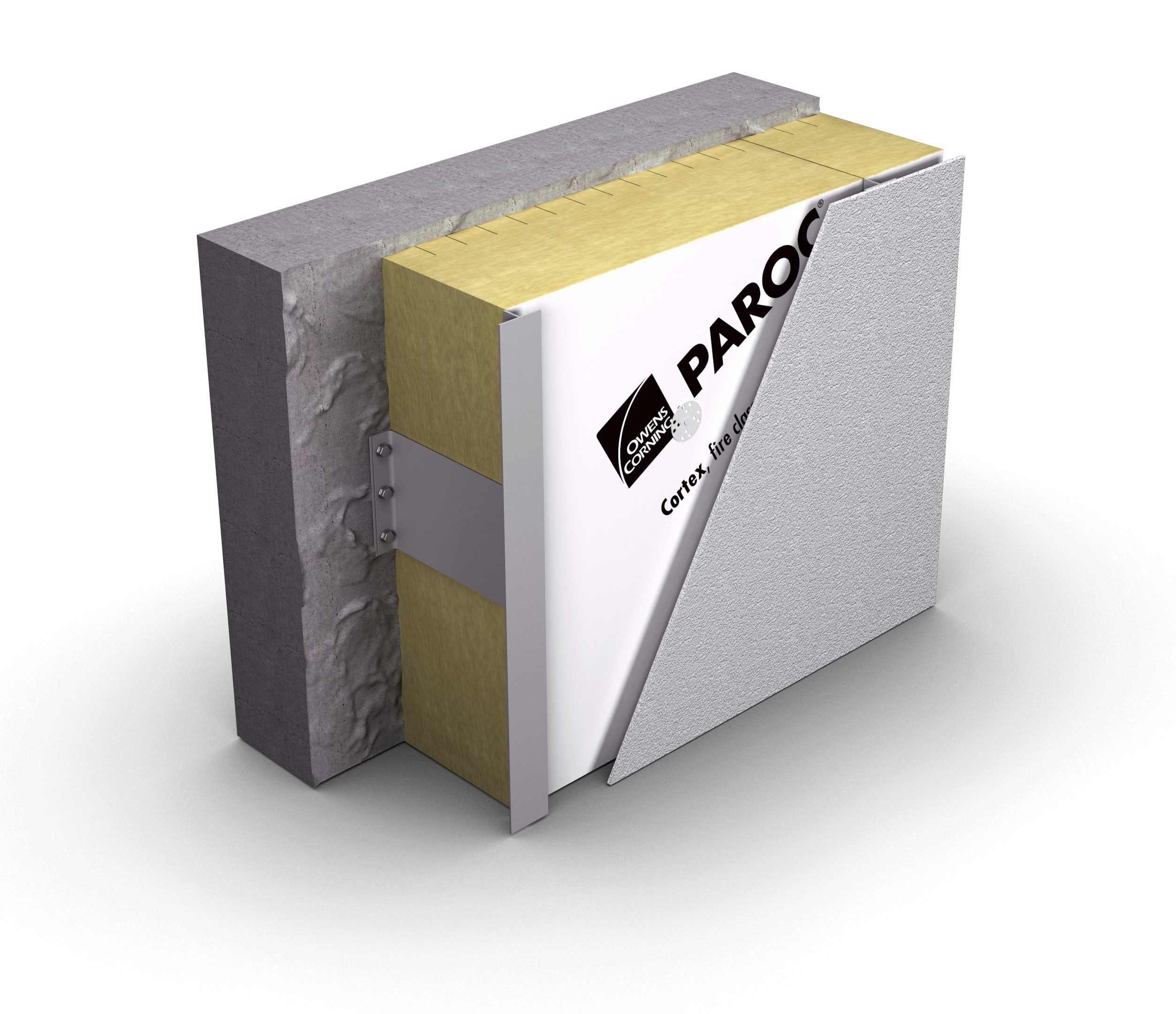
renovation solution ventilated facade on top of old concrete block facade

Products:

Single-layer insulation solution:

  • PAROC WAS 35t: thick (>50 mm) wall slab, lambda 0.033 W/mK
  • PAROC solid: soft stone wool insulation to be used for levelling if needed, lambda 0,037 W/mK

Soft thermal insulation products for two- and three-layer insulation solutions:

  • PAROC Ultra: suitable for all normal wall structures, lambda 0,035 W/mK
  • PAROC Ultra plus: suitable for all normal wall structures, lambda 0,034 W/mK

Wind protection insulation for two - and three-layer insulation solution:

  • PAROC Cortex b: 30 mm thick wind protection insulation, (b = black), lambda 0,033 W/mK
  • PAROC WAS 25t: 30 and 50 mm thick wall slab (b = black), lambda 0,033 W/mK 


The airtightness of the block walls is usually based on the leveling of the inner surface of the wall. If the block wall structure is not airtight, the structure must also be smoothed from the outside before installing new structural layers.


Old wall structure:

  • The most important step in the facade renovation is the analysis of the basic information and condition of the building. Only reliable data of current conditions allows designer to plan the construction of a new facade and to ensure the adequacy of the budget for repair work.  
  • If the old block wall structure is in good condition, new structural layers can be added on top of the old structure. 
  • If necessary, the block wall structure shall be sealed airtight by smoothing the old exterior surface throughout. Preventing air leakage is essential for the good energy efficiency of the structure.


Facade system (according to the manufacturer's instructions):

  • In facade renovations, the condition of the old mounting base shall always be tested with tens of fastener pull-out tests to ensure the correct type of mechanical fasteners for new facade system and the carrying capacity of the old structure.
  • The load bearing structure of metal facade systems is usually made of aluminum and/or stainless steel. The type of metal used in the wall brackets of system has a major impact on the wall`s U-value and required insulation thickness. This is due to the large number of wall brackets (cold bridges) penetrating the thermal insulation layer and the high thermal conductivity of the metal. Stainless steel brackets have the lowest thermal conductivity of the types of metal used.
  • There are also facade systems on the market where the thermal conductivity of brackets has been reduced by cold bridge breakages (e.g. Hilti) or by optimizing the size of the bracket (e.g. Sto Ventro X). The system manufacturer designs the number and size of fastenings per square meter of wall for each object separately according to the requirements of the object. Usually, the number of wall brackets is about. 2–4 pcs/m2. The size and/or number of brackets depends on the weight of the facade cladding and the thickness of the insulation layer. If the type of wall bracket is changed from one system to another during the construction phase, the change in the cold bridge effect of the brackets shall be checked to ensure that the U-value of the structure remains in accordance with the requirements/plans.


Thermal insulation:

Single-layer solution

  • If insulation installation substrate is uneven, a layer of leveling wool with a thin PAROC solid insulation shall be installed as a base for the thermal insulation layer. If the substructure is even, the thermal insulation layer can be installed directly on top of the old structure without the leveling wool layer.
  • In a single-layer insulation solution, the entire thermal insulation and wind protection layer is implemented with one thick PAROC WAS 35(t) -insulation slab layer. Insulation slabs are installed tightly against the substrate and other slabs and fastened with insulating fasteners according to the structural designer's instructions. 

Two and three-layer insulation solutions

  • If necessary, a layer of leveling wool with a thin PAROC solid insulation shall be installed as a base for the thermal insulation layer. 
  • The actual soft thermal insulation layer PAROC Ultra is usually installed either between the wall brackets or alternatively by installing the bracket through the insulation slab to the old load bearing structure. Thermal insulation slabs should always be installed tightly against each other and the load-bearing substructure.
  • Thin wind protection insulation e.g., PAROC Cortex b or PAROC WAS 25(t) is installed on top of the soft thermal insulation layer. Overlapping layers are installed with overlapping seams. The insulation layers are attached to the substructure with insulation fasteners.
  • The seams between the PAROC Cortex b wind protection insulation slabs and the structural joints are taped to ensure complete airtightness of the structure as soon as possible after the wind protection insulation has been installed with PAROC seaming tapes (PAROC XST 022 and PAROC XST 021).

Note! The weather tightness of the wind protection layer and the persistence of the covering should always be ensured by taping all seams. If the seams of the wind protection insulation cannot be taped immediately during insulation installation, the adhesion of the covering must be ensured by using separate PAROC XFF 002 covering pins in the corners of the slab.


Facade cladding:

  • The mounting base for the facade cladding is the metal profiles mounted on the wall brackets. Facade cladding is installed as soon as possible after the insulation has been installed to provide the necessary weather protection for the inner structural layers. Metal-structured facade systems offer wide possibilities for implementing various claddings. The most popular facade surfaces include ventilated rendered facades, brick boards and various building panels and their combinations.
  • In the case of additional thermal insulation, the position of the windows on the facade may need to be moved outer or the windows may have to be replaced completely. It is worth remembering that increasing the structural thickness of the wall also affects the interfaces of the different structural joints. In some cases, this may lead to the need to change e.g. the eave structures of the roof.


Energy efficiency:

Below you will find precalculated insulation thicknesses for some metal facade systems on the market.

U-values (single-layer insulation solution) for STO Ventro X - facade system

Product

Insulation Thickness in mm & u-value

PAROC WAS 35(t)

135

205

U-value, W/m2 K

0.25

0.17

U-values (single-layer insulation solution) for Hilti Eurofox MFT-FOX VT - facade system

Product

Insulation Thickness in mm & U-Value

PAROC WAS 35(t)

125

185

U-value, W/m2 K

0.25

0.27

Thermal conductivity 

The types of metal used in wall brackets have very different lambda values. The table below shows the thermal conductivities of the most typical metals used in fasteners. The higher the thermal conductivity of the metal, the greater cold bridge effect of the fastener.

METAL

Thermal conductivity (λ), W/mK

Aluminum

220

Stell

50

Stainless steel

17

CAD Drawings


Using the PAROC Structure Selector, you can easily find the right CAD drawing for your projects. 

Download CAD files as pdf or dwg, or download a compilation of all CAD files for Building Insulation in pdf format.

Paroc CADs

Contact Paroc Building Insulation