
This is a cache of https://www.paroc.com/en-gb/article/how-to-prevent-condensation-in-ventilation-and-air-conditioning-ducts. It is a snapshot of the page as it appeared on 2026-09-20T00:42:35.558+0000.
Condensation Insulation in HVAC Systems for Ventilation Ducts | Paroc Article Skip to Main Content
Condensation Insulation Ventilation Ducts

Prevention of condensation under thermal insulation of ventilation ducts in the UK

Written By ParocDate Published 2026-06-15

Condensation on ventilation and air conditioning ducts is a common and critical challenge in HVAC design. If it is not properly addressed, condensation can lead to moisture damage, mould growth, corrosion, increased energy losses, and reduced system performance over time. 

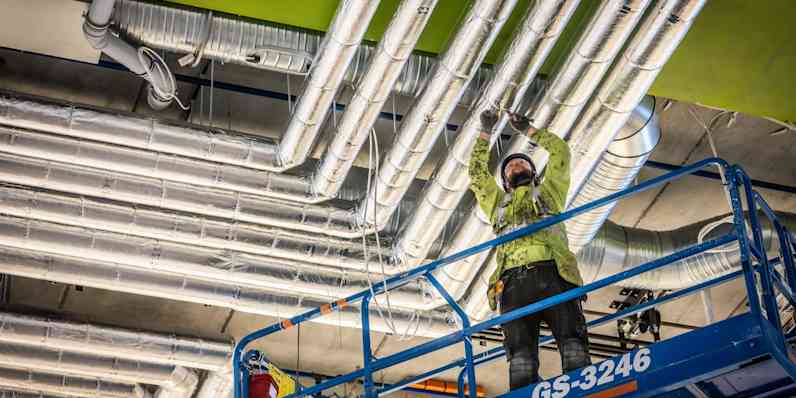
In modern buildings, ventilation ducts are often intentionally left exposed as part of an open-ceiling architectural aesthetic. However, visible ductwork does not eliminate the risk of condensation. On the contrary, exposed ducts are directly affected by room humidity and temperature variations, which increases the importance of correct thermal insulation and a fully sealed water-vapour barrier. 

This article explains why condensation occurs, when condensation insulation is required, and how reliable solutions can be designed using PAROC® Stonewool insulation systems that combine thermal performance with reinforced vapour-tight facings and compatible sealing tapes, enabling complete barrier continuity across facings, seams, and penetrations. 


Why condensation occurs on ventilation ducts 

Condensation occurs when water vapour in the air changes into liquid water on a surface that is colder than the surrounding air. 

In ventilation systems, this typically happens when: 

  • Cold air flows inside a duct located in a warmer environment 
  • The surface temperature of the duct falls below the dew point of the surrounding air 

Common everyday examples include dew on grass or condensation on window surfaces. In HVAC systems, the same physical principle applies, but the consequences are more severe due to continuous operation, concealed installations, and long service lives. 
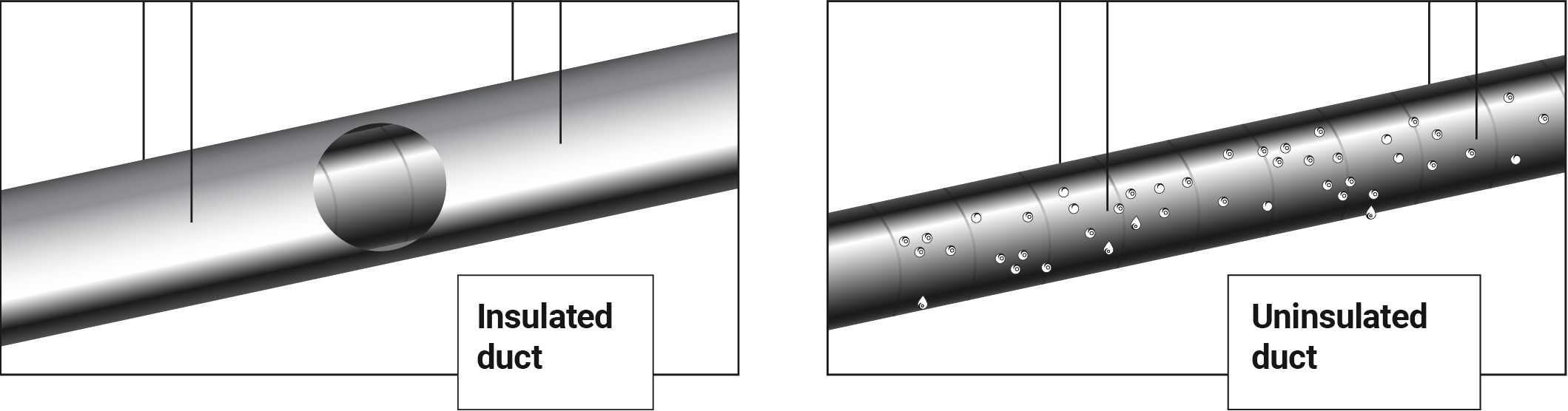
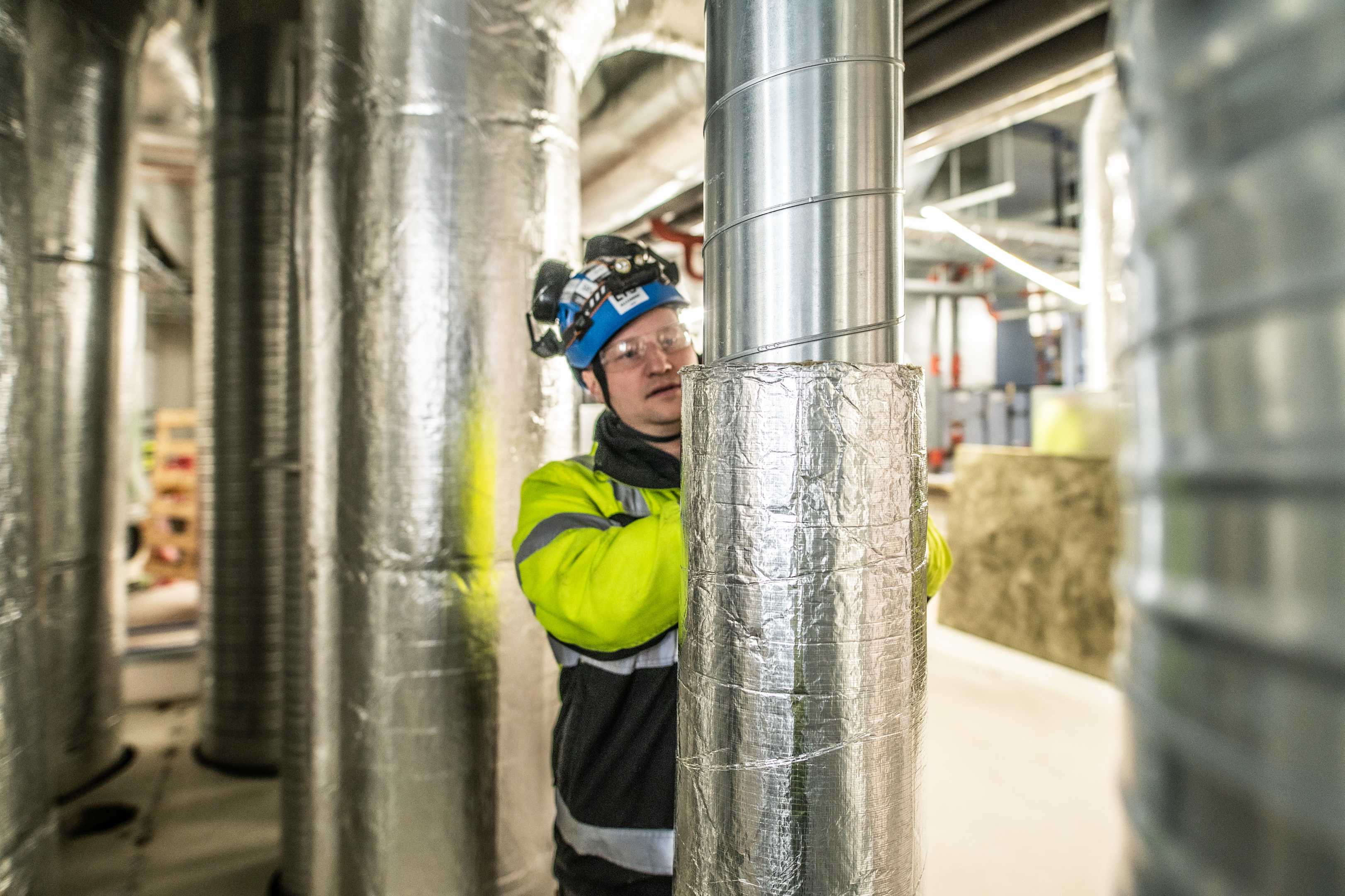
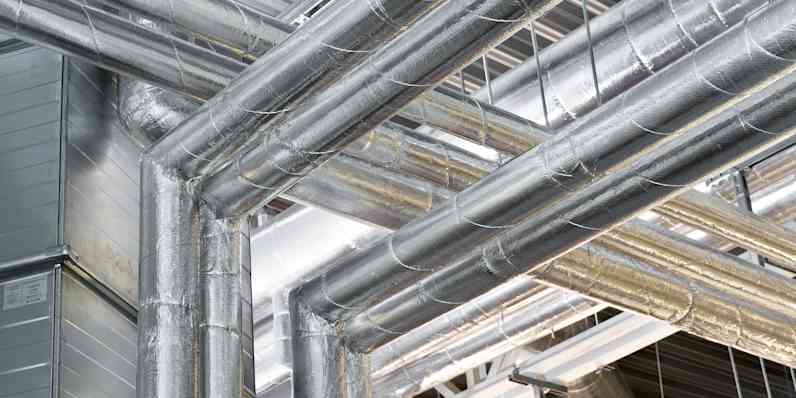
Condensation on ventilation ducts, PAROC

Risks of unmanaged condensation 

If condensation is not controlled, it can cause: 

  • Moisture damage to insulation and surrounding building structures 
  • Mould growth and deterioration of indoor air quality 
  • Corrosion of ducts, fasteners, and support systems 
  • Increased heat loss and higher energy consumption 
  • Reduced service life of ventilation and air conditioning systems  


Condensation insulation: when is condensation prevention required? 

Condensation prevention insulation is required whenever ventilation ducts operate under conditions where moisture formation is possible. Typical situations include: 

  • Ventilation ducts in humid environments such as swimming pools and food processing facilities 
  • Outdoor duct installations exposed to temperature fluctuations 
  • High-humidity indoor spaces 
  • Ducts transporting cold air through warm or heated areas 


Typical ventilation scenarios and insulation requirements 

Type of channel

Air in channelChannel locationReason for insulationRecommended solution

External air duct

Cold

Warm, heated area

Condensation on outer surface 

Thermal insulation with water vapour barrier and taped joints 

Heated intake air

Warm

Unheated cold area

Condensation on inner surface 

Thermal insulation 

Heated intake air

Warm

Heated area

Reduction of energy loss 

Thermal insulation 

Local building regulations may define minimum insulation thickness and thermal conductivity requirements. These vary by country and application and should always be verified during the design phase. 

Regulatory and design requirements for condensation protection in UK 

In the UK, ventilation ductwork must be designed so that condensation does not cause damage and any moisture that forms is safely managed. This requirement is defined by The British Standards Institution Regulation BS 5970, which states that condensed water in ventilation/pipework, heating and cooling systems must not cause harm or must be removable without causing damage. 

In practice, this means that cold ducts must be insulated to prevent humid indoor air from reaching cold duct surfaces. Where condensation may occur, the design must also ensure that the condensation water can be safely drained or collected. 

For ventilation ducts, the required insulation thickness for both thermal and condensation protection is determined by a qualified designer.  

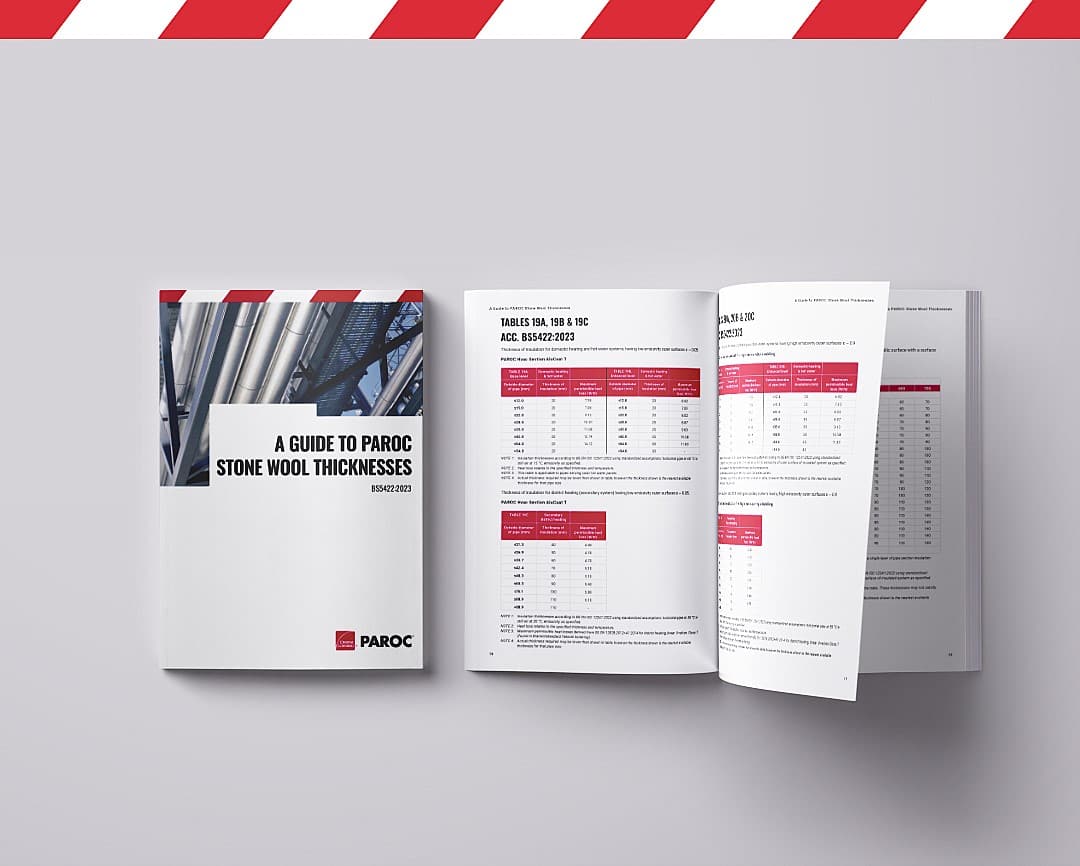
The British Standards Institution Regulation BS 5422, “specifying requirements for thermal insulating materials on pipes, tanks, vessels, ductwork and equipment”, provides recommended insulation thickness tables for different air-duct types and operating conditions, supporting moisture safety and long-term performance. 

UK Thickness Guide

Furthermore, in the UK, construction works must be designed and constructed so that the presence of moisture in or on building parts and installations does not pose an unacceptable risk to hygiene, health and the environment.  

The basic requirements for this come from The Building Regulations. The Building Regulations may apply in and around buildings. These requirements are intended to protect people’s safety, health and welfare. They also set standards for accessibility, water use, energy use and security. The Approved documents give further guidance for many common building situations, and they contain statutory guidance on how to meet the requirements of the Building Regulations. 

To summarise:  

  • The CPR (Construction Products Regulation) standardized safety, performance, and environmental impact requirements for construction products across the EU.  
  • For the UK and Ireland Approved Documents (A to R) and Building regulations (Parts A to M) provide guidance on ways to meet the building regulations.  
  • BS 5970 for on-site install requirements to avoid condensation, and BS 5422 for insulation thickness requirements.  

In practice, cold installations in warm spaces must be designed so that condensation does not occur. This can be done by insulating the installations with a suitable solution including correctly dimensioned insulation thickness and a vapour barrier. If there is a risk of condensation, the condensation water must be drained away or otherwise handled safely. It is often necessary to show that condensation does not occur by calculating surface temperature in relation to dew point. 

Condensation theory and the role of the dew point 

The dew point is the temperature at which air becomes fully saturated, reaching 100% relative humidity, and can no longer retain water vapour in gaseous form. 

Example: 

At an air temperature of 20°C and 50% relative humidity, the dew point is approximately 9.3°C. If the surface temperature of a ventilation duct falls below this value, condensation will form unless the duct is correctly insulated and sealed. 

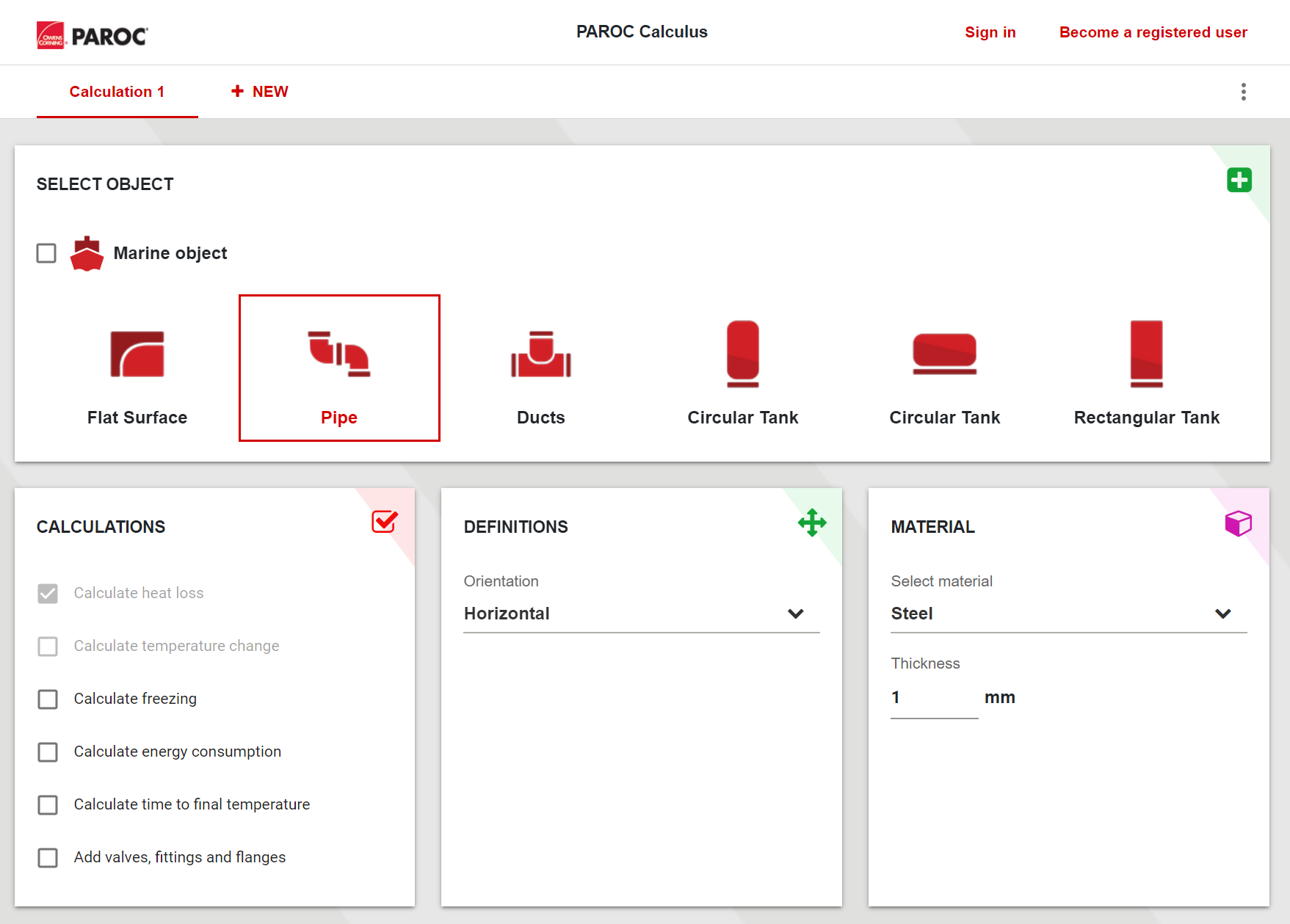
Dew point calculations are therefore a key design parameter and should be considered early in the specification process. In practice, dew point assessment should be supported by calculation tools rather than assumptions. For example, PAROC® Calculus allows designers to calculate surface temperature, required insulation thickness, and heat loss in accordance with EN ISO 12241. By verifying that the duct surface temperature remains above the surrounding air’s dew point under defined operating conditions, designers can reduce condensation risk already at the specification stage. 

How condensation is prevented in UK HVAC systems 

Condensation is prevented by ensuring that the surface temperature of the duct remains above the surrounding air’s dew point throughout operation. 

This requires: 

  • Correct insulation thickness, dimensioned from a dew point assessment. Calculation tools such as PAROC® Calculus help specifiers determine surface temperatures and heat loss in accordance with EN ISO 12241, enabling accurate insulation thickness selection. 
  • A continuous water-vapour barrier provided by a vapour-tight facing, such as reinforced aluminium AluCoat, across the full installation. 
  • Airtight sealing of all joints, seams, and penetrations with matching tapes to maintain barrier continuity and reduce water vapour permeability. 

The facing of the insulation product plays a critical role in condensation control. The vapour barrier must be continuous, unbroken, and non-perforated to prevent humid air from reaching the cold duct surface. Even high-quality insulation will not perform as intended if the water-vapour barrier is incomplete or damaged. 

For this reason, wire-mesh-faced insulation mats or otherwise perforated outer surfaces cannot be used unless they are combined with continuous aluminium facing and properly taped seams. 

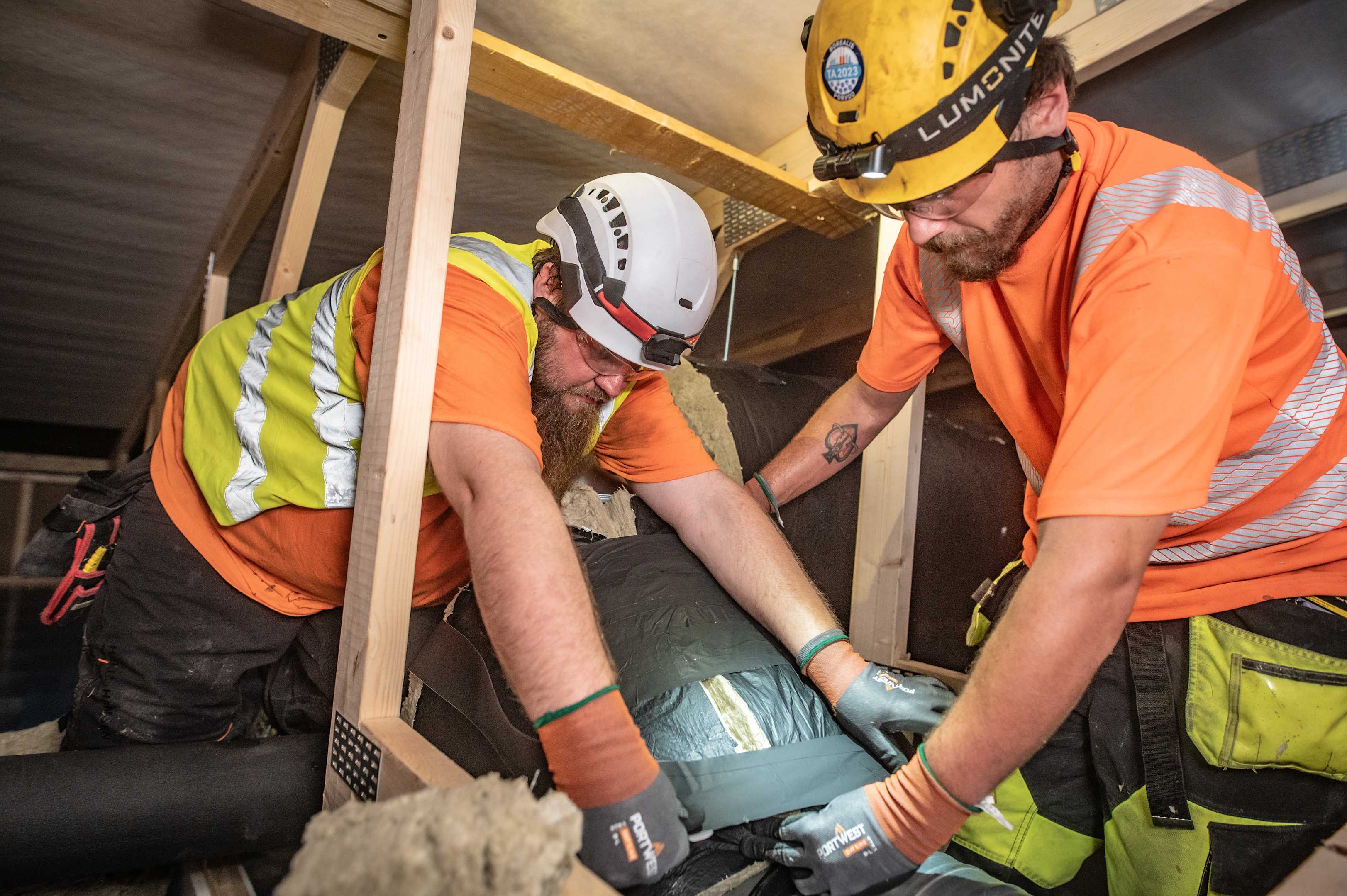
Sealing the water-vapour barrier with PAROC tapes

Keeping HVAC ventilation duct insulation dry is essential 

The duct’s insulation performance depends on remaining dry from liquid water. Wet insulation behaves like a wet coat and no longer provides effective thermal protection. Thermal resistance drops and heat losses increase. Preventing moisture ingress is therefore a design and installation priority for HVAC ductwork. To stop humid air from reaching cold duct surfaces, a fully sealed water-vapour barrier should be used.  

Moisture can enter insulation through: 

  • Breaks in the water-vapour-tight barrier due to damaged or improperly installed facings, unsealed joints, seams, or penetrations 
  • Inadequate insulation thickness causes the duct surface temperature to fall below the dew point 
  • Contaminated duct surfaces, such as grease, dust, or moisture, which prevent welding pins from bonding correctly and make it impossible to achieve continuous water-vapour-tight facing and fully sealed joints 

If moisture enters and reaches the duct through the insulation, the following consequences can be expected: 

  • Reduced thermal resistance (lambda, λ in use) 
  • Increased energy losses 
  • Higher risk of corrosion under insulation (CUI) 
  • Compromised long-term system durability 

The principle is simple: when the water-vapour-tight facing is sealed continuously, moisture cannot enter the insulation. 


Key principles for reliable condensation protection of HVAC ductwork 

Reliable condensation control is achieved through correct design, correct product selection, and correct installation. The following principles reflect general industry’s best practice and should be applied in accordance with project-specific requirements and national regulations. 

Best practice principles include: 

  • Determining insulation thickness based on dew point calculations. Condensation risk should always be evaluated by comparing duct surface temperature with the dew point of the surrounding air. 
  • Using stone wool insulation products with vapour-tight facings for cold applications. This helps prevent humid air from reaching cold duct surfaces. 
  • Ensuring all joints, seams, and penetrations are thoroughly sealed using compatible tape. A continuous vapour barrier is essential to prevent moisture ingress. 
  • Minimising thermal bridges by reducing unnecessary joints or interruptions. Fewer discontinuities reduce the risk of cold spots where condensation may occur. 
  • Following manufacturer installation instructions without shortcuts. Proper installation practices are critical, as incomplete vapour sealing will undermine even high-quality insulation systems. 

Please note that even the highest-performing insulation cannot prevent condensation if the water-vapour barrier is incomplete or incorrectly installed. 

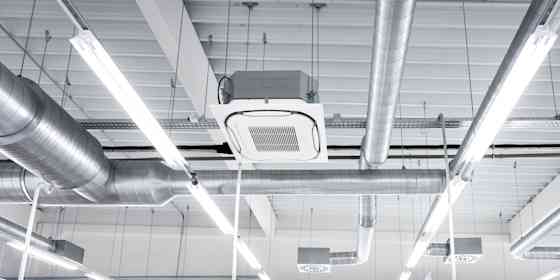
PAROC insulation, condensation prevention

PAROC® Stonewool solutions for HVAC condensation control 

PAROC® Stonewool insulation solutions for HVAC applications are designed to support effective condensation control, thermal efficiency, and fire safety throughout the service life of the building. 

Key performance benefits include: 

  • Effective condensation control through reinforced aluminium AluCoat or blackcoat water-vapour-tight facings, when joints are properly sealed with matching PAROC® tapes 
  • Stable thermal performance (λ) over time thanks to dimensionally stable stone wool fibres that do not age or settle, with λ values specified per product and temperature in each product Declaration of Performance (DoP
  • Fire resilience derived from the properties of non-combustible stone wool material, which achieves Euroclass A1 for reaction-to-fire classification 
  • Long-term durability, with stone wool maintaining thermal and fire performance throughout the reference service life of the building 

PAROC® Stonewool insulation does not shrink, degrade, or lose performance, making it a reliable long-term solution for ventilation systems. Confirm water-vapour barrier performance and other key properties in each product’s Product Data Sheet and Declaration of Performance (DoP). 


Tools and standards supporting correct specification 

HVAC ventilation insulation design must be based on proper tools and recognised standards. 

To support accurate insulation design and specification, HVAC professionals can use: 

  • Calculation tools such as PAROC® Calculus, which perform thermal insulation calculations accordance with EN ISO 12241 
  • Harmonised European product standards such as EN 14303 (mineral wool insulation specification) and recognised test methods for vapour transmission 
  • National building and HVAC regulations defining insulation performance requirements, such as BS5970 & BS 5422

Using calculation tools and applicable standards during the design phase helps reduce technical risk and ensures regulatory compliance. 


Condensation control starts at specification 

Condensation insulation is a critical part of HVAC system performance, energy efficiency, and building durability. By understanding condensation theory, applying dew point-based design, and specifying durable stone wool solutions with vapour-tight installation, specifiers can minimise long-term risks and ensure reliable HVAC performance throughout the building lifecycle. 

Why select PAROC® for condensation insulation? 

PAROC® HVAC ventilation insulation products with water-vapour-tight facings, together with their matching sealing tapes, support the creation of a continuous water-vapour barrier for condensation insulated ventilation ducts. These combinations help designers meet dew point-based specification requirements and support reliable long-term performance. 

Both PAROC® AluCoat and blackcoat facings are specified as water-vapour-resistant barriers. When seams are sealed with matching tapes, they reduce vapour permeability and help prevent condensation. These sealed surfaces provide ultra-low vapour transmission for the entire assembly, keeping the insulation layer dry in service. 

All above above-listed PAROC® HVAC products declare their moisture-performance properties in the Product Data Sheet and Declaration of Performance (DoP), available on each product page. 

Moisture resistance is reported as Water Vapour Diffusion Resistance MV2 (s₍d₎ > 200 m) according to EN 14303, based on vapour transmission testing defined in EN 13469. Product data sheets also include verified λ values and Euroclass reaction-to-fire classifications. 

For project-specific guidance, calculation support, or assistance with product selection, PAROC® HVAC insulation experts are available to support specification and design processes. 

Share this page on:

Related Articles

The Ultimate Guide to Pipe Insulation: More Than Just Thermal Conductivity

Discover why PAROC stone wool HVAC pipe insulation outperforms—it's about internal structure, regulatory compliance and real energy savings, not just thermal conductivity.
Read more
Hvac thermal Pipe insulation

Water Pipe Insulation and its critical role in HVAC systems

Insulation makes all the difference to efficiency and compliance. Chilled water pipe insulation, thermal pipe insulation, non-combustible pipe insulation.
Read more
Water Pipe Insulation in HVAC systems

Is Your Pipe Insulation Compliant with UK Building Regulations?

How to choose the best pipe insulation for your project while meeting the legal standards. Covering BS 5422:2023 Part L, Part B and sustainable standards.
Read more
stone wool pipe insulation