





This is a cache of https://www.paroc.com/en/article/why-insulation-matters-in-ccs-infrastructure. It is a snapshot of the page as it appeared on 2026-09-27T02:13:51.552+0000.
Carbon capture and storage: why insulation matters in CCS infrastructure | Paroc Article Skip to Main Content
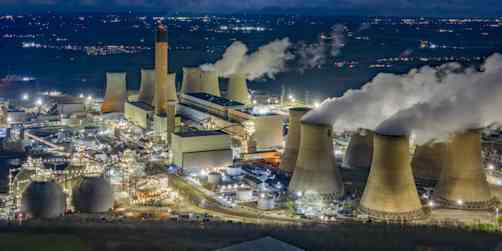
Drax power station uk carbon capture

Carbon Capture and Storage: Why Insulation Matters in CCS Infrastructure

Written By Paroc•Date Published 2026-09-02

Carbon capture and storage (CCS) is growing fast. It is moving from small pilot schemes to industrial-scale projects across the world. CCS plants can be thermally complex facilities and pose a real operational challenge for specifiers, EPCs, and asset owners. Getting the insulation right is key to making them work well, but PAROC® and FOAMGLAS® insulation solutions are ideal for the wide temperature ranges and applications required.

Net zero driven growth

The European Commission sees large-scale CCS as key to cutting industrial emissions. The EU's Net Zero Industry Act targets 50 million tonnes of CO2 storage capacity every year by 20301. It also asks 44 European oil and gas firms to build the same amount of storage capacity together.

Not only has planned global CCS capacity grown by over 30% a year since 2017, but over 700 carbon capture, utilization and storage (CCUS) sites are now being planned globally. According to the IEA2 , dedicated CO2 storage capacity could reach an impressive 620 Mt CO2/yr by 2030. 

Five European CCS projects have become operational since mid-2024. For example, Norway has two landmark projects already running; Northern Lights open-access CCS hub and Brevik CCS cement plant and the Porthos system in the Netherlands should be operational late 2027. Globally there are now 77 CCUSs running and 47 under construction (GCCSI, Global Status of CCS 20253).

The UK leads the 2025 CCSA report with over 100 UK projects in development. Together, they could capture over 77 million tonnes of CO2 a year. The UK also has 22 CO2 storage licenses in progress.

A process that spans extreme temperatures

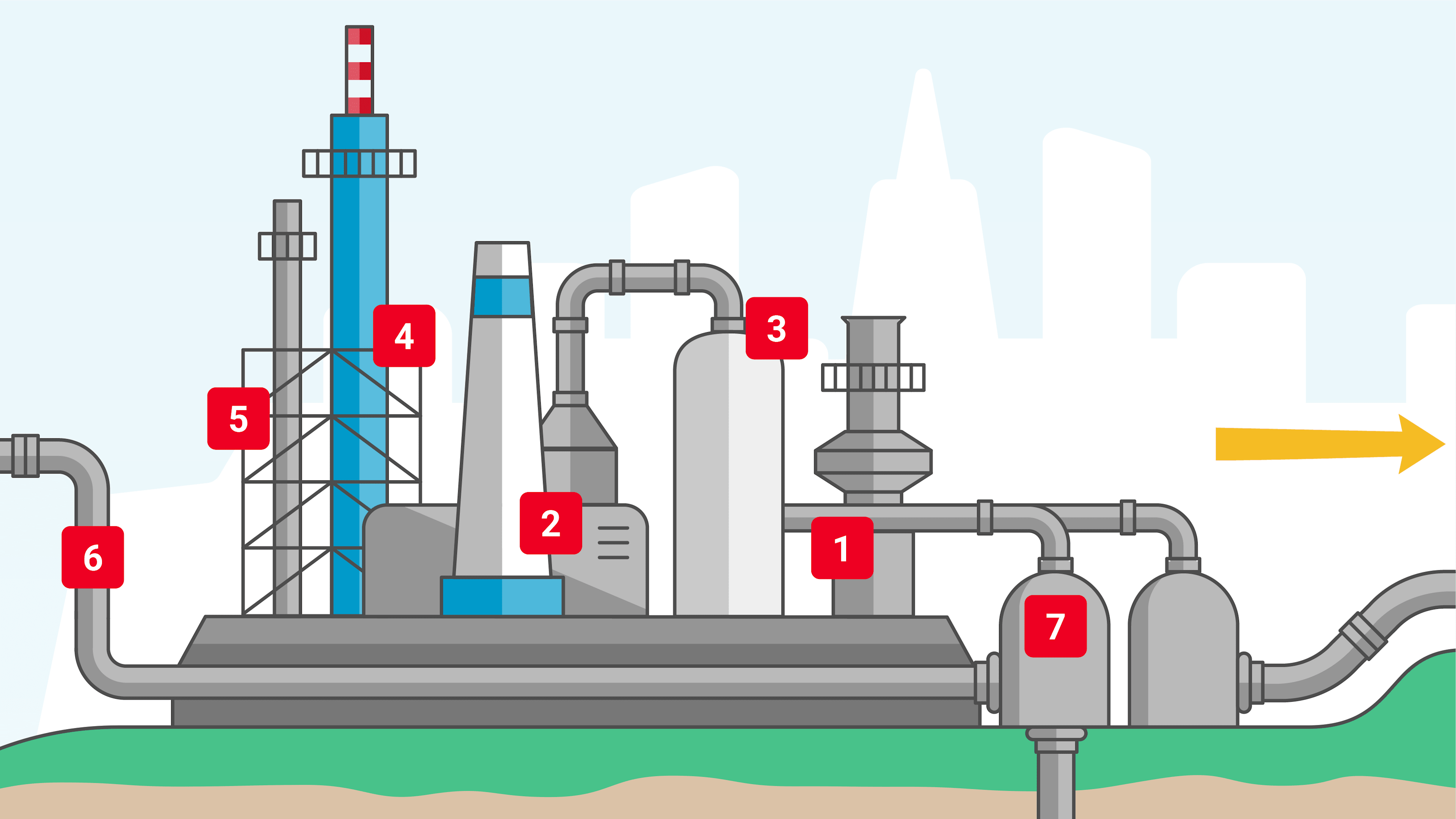
A carbon capture facility does not run at one temperature. CO2 moves through various heat zones within the plant, combining steam, hot, cryogenic, and liquid states.

  1. Hot flue gas leaves the source stack.
  2. Next, it passes through steam systems and heat recovery equipment. 
  3. Then it moves into quenching columns for cooling.
  4. Next, it enters the absorption and ammine regeneration columns, where the CO2 is captured.
  5. After that, it goes through compression and conditioning equipment.
  6. (+7.) Finally, it is turned into a liquid for storage or transport. 

By the end of this journey, CO2 has passed through both hot and cold processes, tanks, vessels, and pipework. Some equipment must withstand -50°C, and pipework can carry liquid CO2 at -30°C or colder.

Carbon capture process diagram across all operating temperatures
Image: Carbon capture process diagram across all operating temperatures

With such tough and varied thermal requirements across the process, insulation specifications need to be fit for purpose at each stage. PAROC® and FOAMGLAS® insulation solutions complement each other in these temperatures and environmental ranges. PAROC® Stonewool insulation performs brilliantly for tanks and pipework, safely operating up to 700°C, while FOAMGLAS® cellular glass insulation works at temperatures as low as -265°C then up to 430°C.

Find out more here


Why insulation matters throughout the CCS chain

Insulation directly affects how well the CCS process runs. It also affects costs, safety, and the plant’s lifespan.

Boost energy efficiency

Cutting heat loss across pipes, steam systems, and cooling columns can help lower energy use and running costs.

PAROC® Stonewool has low thermal conductivity, so it cuts heat loss across hot process pipework and steam lines. FOAMGLAS® benefits processes across a wide range of temperatures as its closed-cell structure keeps its insulating value even in wet or humid conditions and ensuring moisture does not get in.

Ensure process stability

The capture process needs steady, precise temperatures. Poor insulation can disrupt operating temperature, which can reduce how much CO2 the plant captures.

PAROC® and FOAMGLAS® insulation holds its shape and thermal performance through repeated heating and cooling. Neither material shrinks, swells, or loses effectiveness, which helps keep operating temperatures steady.

Minimize corrosion under insulation (CUI)

This is one of the costliest risks of any insulated plant. It is also one of the most preventable. Corrosion costs the world economy around $2.2 trillion a year. About $1 trillion of that cost hits the oil, gas, and chemical sectors. Recent ExxonMobil data calculated CUI causes 40 to 60% of their total piping repair costs.

FOAMGLAS® cellular glass is an impermeable insulation material and will not absorb water. When applied according to guide specifications, it minimizes water intrusion and retention. Particularly important during the quenching, absorption, and regeneration stages. FOAMGLAS® insulation and accessories are manufactured to mitigate corrosion even in the toughest environments.

PAROC® Stonewool has best-in-class water repellent performance, and when specified and installed correctly, forms a reliable moisture barrier for ambient and hot pipework, vessels and tanks. For example, independent test laboratories4 have confirmed that PAROC WR products have significantly lower water absorption properties, offering an average water absorption that is more than 10 x better than the requirements when tested in compliance with EN1609 and EN13472/24h).1

Enhance personnel protection

Extreme surface temperatures on both hot and cold parts of a plant can put workers at risk. Both PAROC® and FOAMGLAS®, when specified to standard reference thicknesses, keep external surface temperatures within safe touch limits5.

Long-term durability

Insulation failures are costly to inspect, repair, and replace once a plant is up and running. PAROC® Stonewool will be expected to last the for the lifetime of the plant, given proper installation and care during any maintenance periods. FOAMGLAS® cellular glass is fully inorganic, so it does not age, rot, or break down over time. Together, they help cut inspection and replacement costs for whole-life cost-effectiveness.


4 The data is based on an independent third-party comparison of products from the most important mineral wool manufacturers, which was carried out by Eurofins Lab 19036 on 16 August 2019.
5 This can be verified by use of a recognized calculation tool that complies with the international standards. Both Paroc Stonewool and Foamglas Cellular glass offer this support.
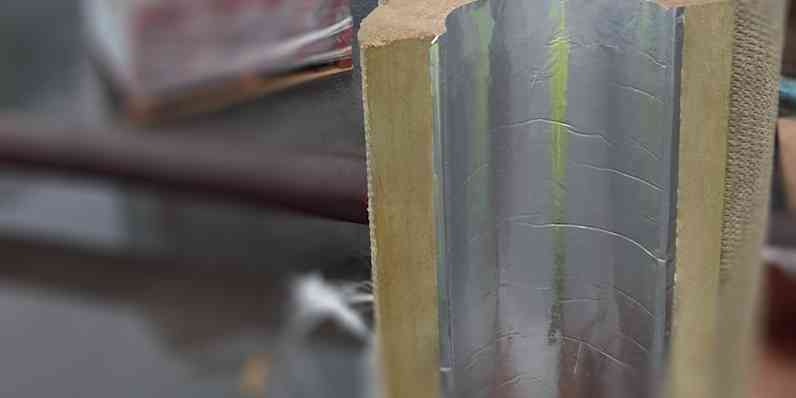
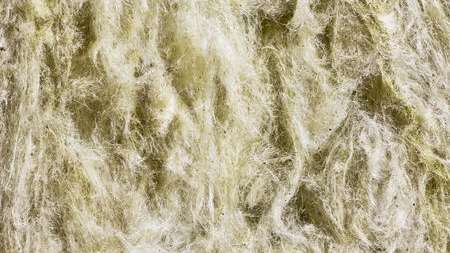
PAROC Stonewool material close up image
PAROC® Stonewool
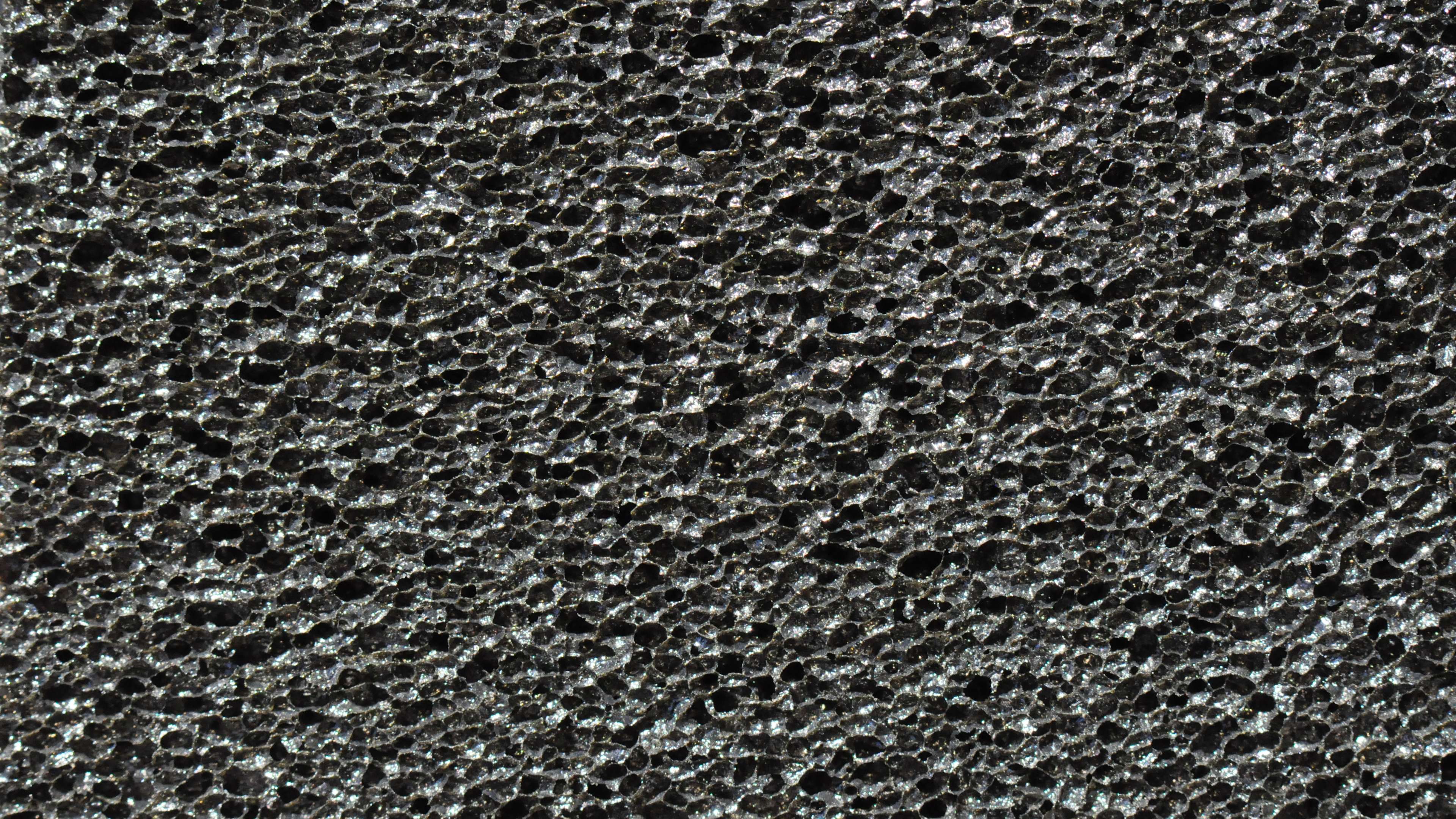
FOAMGLAS Cellular glass material close up image
FOAMGLAS® cellular glass


A growing opportunity, not just a technical challenge

CCS growth is a genuine opportunity, not just a design conundrum. Global appetite and investment are rising in both public and private terms. 

Fernando Gómez, Head of the Future of Materials at the World Economic Forum, summed up the potential in 2026. “Scaling CCU could be an economic opportunity while offering an additional path to abate CO2 emissions. With credible policy signals, long-term investment and cross-sector partnerships, CO2 could mature from a liability into an asset, creating new market value while accelerating industrial decarbonization.”6

There’s a lot to be excited about with projects such as HyNet and Track-1 in the UK, and cross-border projects linking Greece and Egypt, Switzerland and Norway. State funding is rising across Europe as well with GCCSI recording the current investment total at around €42 billion.

As the focus on CCS continues, it’s critical for asset managers and investors to achieve the best outcomes – both for CO2 capture and whole-life operating costs. That means exploring insulation specifications early, during Front-End Engineering Design (FEED) stages. Getting the specification right the first time avoids costly rework later. It also builds the long-term reliability that asset owners now expect.

Learn more about CCS insulation solutions, including specification guidance and product information.

Frequently asked questions

Share this page on:

Related Articles

Carbon Capture and Storage: Why Insulation Matters in CCS Infrastructure

As carbon capture and storage projects increase across Europe, insulation plays a critical role in process efficiency, asset protection, safety and long-term performance.
Read more
Drax power station uk carbon capture

High-Temperature Insulation: A Guide for Industrial Applications

Learn all you need to know about high-temperature insulation for industrial applications. Technical guides, product information and tips for insulating high-temperature industrial apparatus.
Read more
Industrial insulation

Industrial Pipe Insulation for heat-traced pipelines – an innovative solution

Discover a high-temperature industrial pipeline insulation solution for heat-traced pipelines - reducing labour, waste and costs.
Read more
Industrial Pipe Insulation for heat-traced pipelines

How to benefit from the EN 17956 standard

PAROC Specification team share insights on the new European standard EN 17956 which classifies insulation solutions into energy efficiency classes.
Read more
Background showing insulated pipes and elbows in the process industry