
This is a cache of https://www.paroc.com/en-gb/applications/technical-insulation/hvac/ventilation-air-conditioning. It is a snapshot of the page as it appeared on 2026-09-20T01:20:44.233+0000.
Ventilation duct insulation | Paroc Applications Skip to Main Content

Ventilation duct insulation

Ventilation Insulation - PAROC® Insulation for ventilation and air conditioning

Insulate ventilation to reduce thermal loss and improve comfort

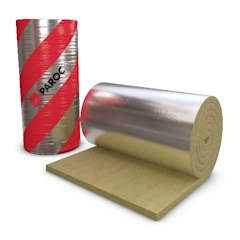
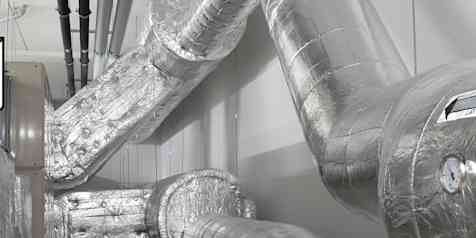
With the right ventilation insulation, unnecessary energy losses related to ventilation ducts and air conditioning systems can be reduced. Effective thermal insulation of the duct installation helps limit heat losses and prevents unwanted temperature changes - both in the air transported through the ducts and in adjacent indoor spaces.  

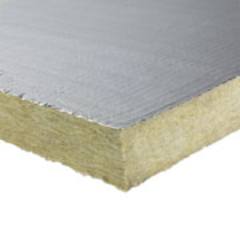
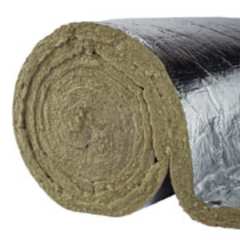
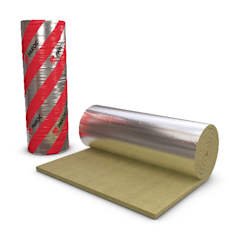
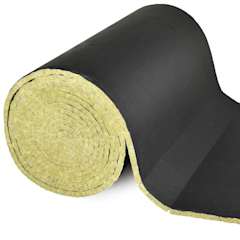
Insulation also helps prevent external condensation by keeping the surface temperature of the duct insulation above the dew point of the surrounding air. To minimize water-vapour-diffusion, PAROC® solutions are available with a water-vapour-resistant barrier (AluCoat or blackcoat reinforced aluminium foil), and PAROC® tapes for precise joint sealing without additional gluing. 

Insulation can also limit sound transmission and lower noise levels from ventilation and air conditioning systems, contributing to a comfortable indoor climate. Properly designed and installed insulation helps ensure reliable and efficient system operation.  
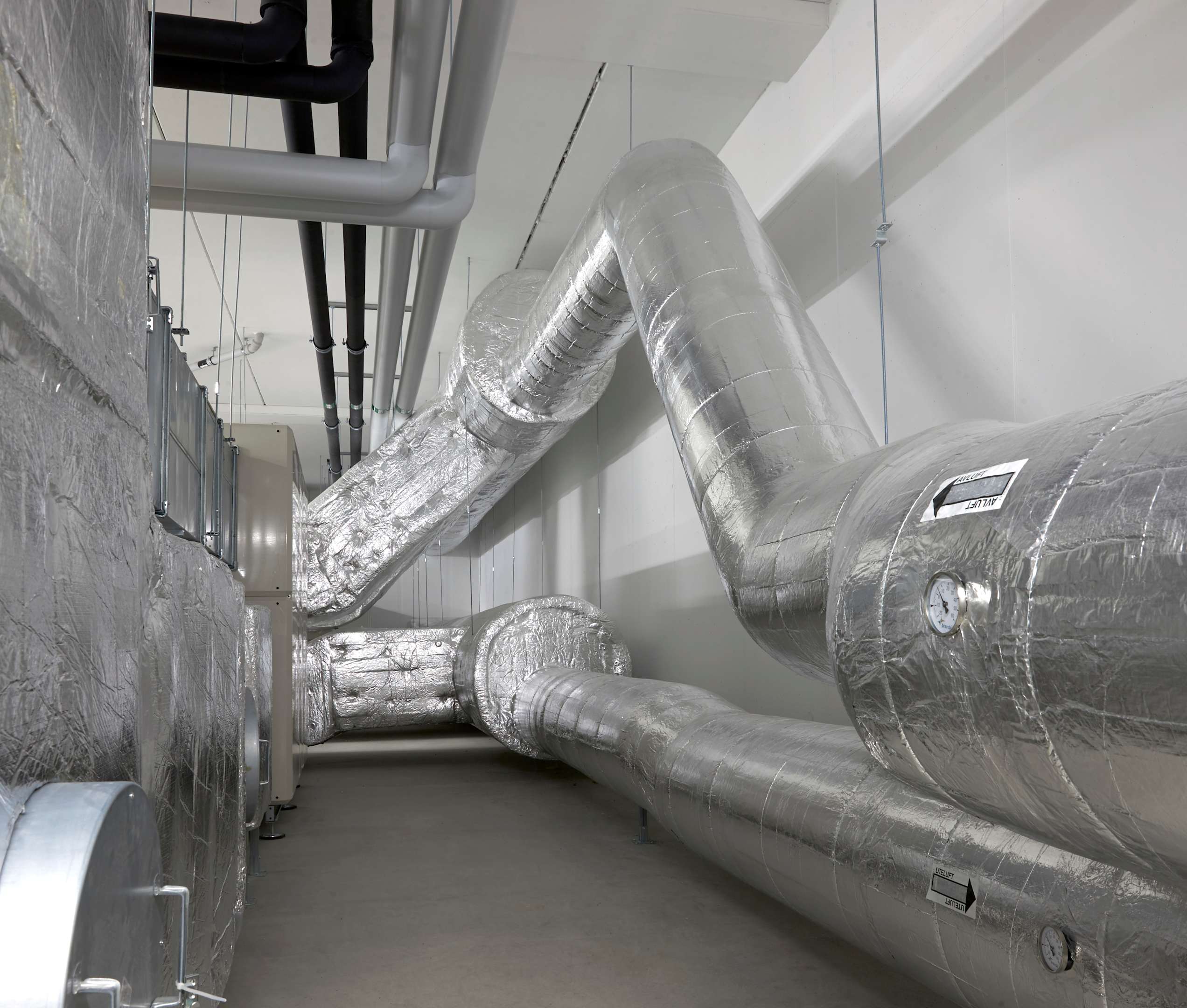
Ventilation Duct Insulation for HVAC Systems

Benefits of HVAC insulations for ducts

Prevent condensation, icon

Prevent condensation

The factors that determine whether water vapour condensation forms on the duct are the surface temperature of the duct, the ambient air temperature, and relative humidity. To prevent condensation on the insulation surface, the duct needs to be insulated so that the surface temperature of the insulation is higher than the dew point of the surrounding air. 

PAROC® products are available with reinforced, water‑vapour‑resistant aluminium foil facing, offered as AluCoat or blackcoat. When correctly installed and sealed with PAROC® tapes, the facing forms a continuous water-vapour barrier with airtight joints, without the need for additional gluing, enabling protection against condensation. 

Reduce thermal transfer, icon

Reduce thermal transfer

Ducts that transport warm and cold air require good thermal insulation. If the cool or warm air is heated or cooled by the surrounding air, the HVAC system will function less effectively, resulting in heat transfer.

PAROC® insulation products for ductwork with low thermal conductivity* and high thermal resistance can contribute to limited heat loss or gain, and temperature changes, which in turn can lead to lower and more efficient energy use and reduced operating costs.

*Please consult the respective local product data sheet for more information.

Avoid fire hazards, icon

Avoid fire hazards

When tested to EN 13501-1, PAROC® products offer the highest fire class either Euroclass A1 or A2-s1,d0. Our stone wool insulation products are non-combustible. They do not burn or contribute to fire spread. They will not produce any smoke or very limited amount of smoke, nor do they produce flaming droplets. The softening temperature of stone wool products is *over 1000°C. The fire performance of stone wool does not deteriorate with high temperatures, nor with time.

*Owens Corning internal test results, June 2023-24 for normal quality control/FPC.
UK HVAC for Pipe & Ductwork Insulation CPD, image

HVAC UK & Ireland

Pipe & Ductwork Insulation CPD

Verified by The CPD Certification Service and CIBSE, this online or in person 45-minute CPD goes through how to specify insulation to meet stakeholders needs, provide the tools and knowledge for calculating thickness and help ensure project requirements are met for pipe & ductwork insulation.

For example:

  • Regulations and certification for manufactures
  •  BS 5970 for site install and BS 5422 thickness guide for insulation
  •  Product and material fire safety
  •  Corrosion protection and health risk information
  •  Project specification tools

When is condensation prevention insulation needed for ventilation ducts? 

Condensation prevention insulation is required when ventilation or air conditioning ducts operate so that the surface temperature may fall below the dew point of the surrounding air. Without a correctly dimensioned insulation system, water-vapour can condense and cause moisture damage, increase the risk of corrosion, and reduce long-term performance. 

Reliable condensation control is based on dew point‑driven design, whereby the surface temperature of the insulated duct is maintained above the dew point of the surrounding air. PAROC® offers HVAC solutions with integrated condensation control through thermal insulation products incorporating a water-vapour-resistant barrier: AluCoat or blackcoat reinforced aluminium foil. When joints and seams are correctly sealed with matching PAROC® tape, a continuous water-vapour barrier is achieved across the installation, limiting water vapour transmission into the insulation layer.

Reliable condensation design with PAROC® HVAC insulation solutions 

  • Design using dew point‑driven thermal calculations. Calculations can be made with PAROC® Calculus 
  • Dimension in accordance with EN ISO 12241 
  • Specify according to the harmonised European product standard EN 14303 
  • Comply with national building and HVAC regulations 

In the table below, you can see when condensation insulation is required, typical operating conditions, and recommended insulation solutions for different ventilation scenarios.

Duct

Air in duct

Location of duct

Why insulate

What solution

Supply duct for outdoor air, air conditioning, etc

Cold air

In warm room (higher temperature than inside the duct)

Prevent condensation on exterior surfaces

Thermal insulation + vapor-resistant barrier and tape

Heated air, exhaust air, etc

Heated air

In a cold room

Prevent interior surface condensing

Thermal insulation

In a  warm room 

Prevent heat loss and energyloss

Thermal insulation

Products

Filter

Certificates and Declarations

CE

Symbol for CE

M1

Symbol for M1 certificate

EUCEB

Symbol for EUCEB certificate

BES 6001

symbol for BES 6001 certificate

Our PAROC insulation products are certified with CE, enabling you to build to high standards. To help you make informed decisions, all our product declarations, DoP and EPDs, are made available on our website. We can also supply you with additional mandatory and voluntary certifications related to responsible sourcing, emissions and safety, such as BES 6001, M1, Blue Angel, and Nordic Swan.

PAROC® Calculus 

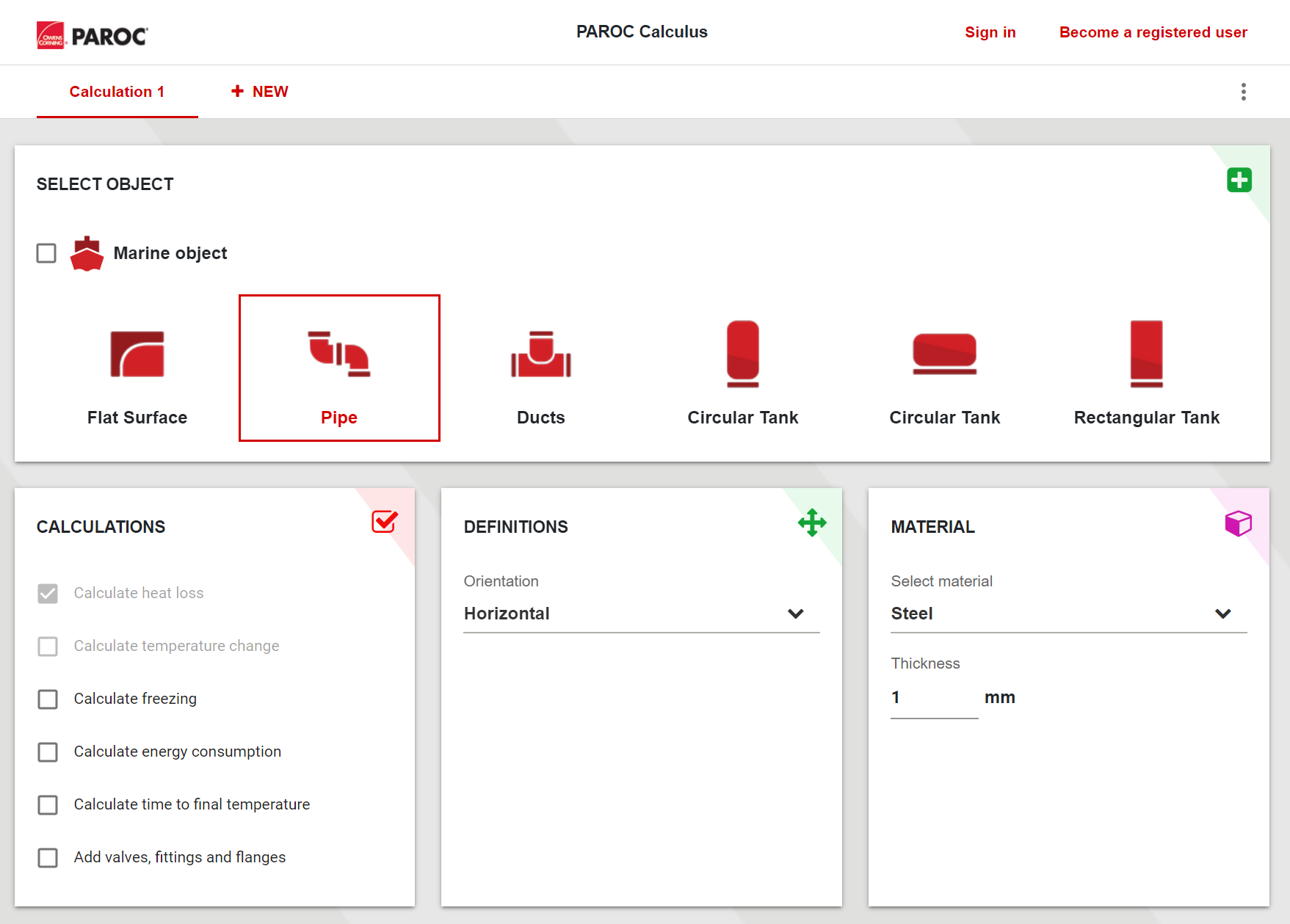
PAROC® Calculus is a technical insulation calculation program for dimensioning thermal insulation for various applications in the HVAC and Process industries.

PAROC® Calculus features:
  • Easy-to-use interface; works on PCs, tablets, and cellphones.
  • Calculations of heat losses, surface temperatures, and temperature drop in pipes, ventilation ducts, process industry tanks, valves, and flanges. 
  • Simple input of pipe diameters and duct dimensions (predefined).
  • Correcting for thermal bridges of pipe and duct suspensions.
  • Print calculations as a PDF. Multiple simultaneous printouts in PDF are possible.
  • Saving projects and customizations (for registered users).
  • Calculations based on the ISO 12241:2022 standard

Screenshot of Paroc Calculus software interface showing insulation calculation results for HVAC applications

Tools and Documents

Certificate Search

Certificate Search, icon

Installation Guidelines

Installation Guidelines, icon

Design Guides

Design Guides, icon

STONE WOOL DOES NOT BURN

When choosing insulation materials, you make decisions that can affect people’s safety, property protection, and the future of the building. Independent tests show that stone wool contributes to the fire performance of structures in new construction, renovation projects, HVAC systems, and industrial applications.

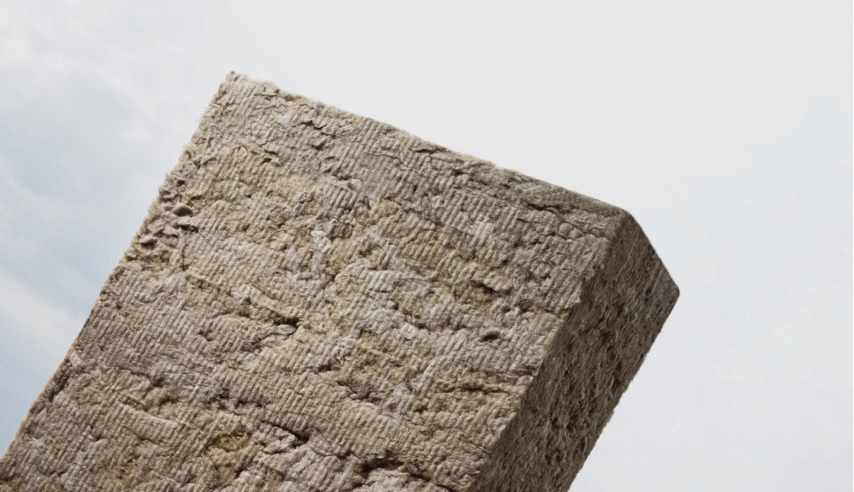
PAROC® Stonewool is a non-combustible insulation material with excellent resistance to fire and moisture. It maintains its performance over time and is a durable and reliable choice for long-lasting structures.

The next time you're planning a project, make a responsible material choice.

STONE WOOL DOES NOT BURN

The latest ventilation insulation news

Find below the latest HVAC articles and blogs.

Prevention of condensation under thermal insulation of ventilation ducts in the UK

UK Condensation insulation for ventilation ducts explained. Learn when condensation occurs, how dew point affects HVAC design, the UK building regulations and how PAROC® Stonewool supports reliable performance.
Read more
Condensation Insulation Ventilation Ducts

The Ultimate Guide to Pipe Insulation: More Than Just Thermal Conductivity

Discover why PAROC stone wool HVAC pipe insulation outperforms—it's about internal structure, regulatory compliance and real energy savings, not just thermal conductivity.
Read more
Hvac thermal Pipe insulation

Water Pipe Insulation and its critical role in HVAC systems

Insulation makes all the difference to efficiency and compliance. Chilled water pipe insulation, thermal pipe insulation, non-combustible pipe insulation.
Read more
Water Pipe Insulation in HVAC systems

Contact Paroc Technical Insulation